
Puppy classes vs one-to-one puppy training
If you searched for puppy classes near me, puppy school, or puppy training classes, this guide will help you decide what kind of support actually fits your puppy.
Puppy classes can be useful for some puppies, but they are not the right fit for every family. Some puppies are overwhelmed by busy rooms, some are too excited to think, and some owners simply need help with what is happening at home.
Please rest assured, choosing one-to-one support does not mean your puppy has failed at classes or that you have done anything wrong. It just means you are advocating for the puppy in front of you.
Jennie offers calm one-to-one puppy training across Essex, including South Woodham Ferrers, Chelmsford, Braintree, Maldon, and nearby areas. This page explains when a class may suit, when 1-2-1 support may be better, and how to choose without feeling pushed into the wrong route.
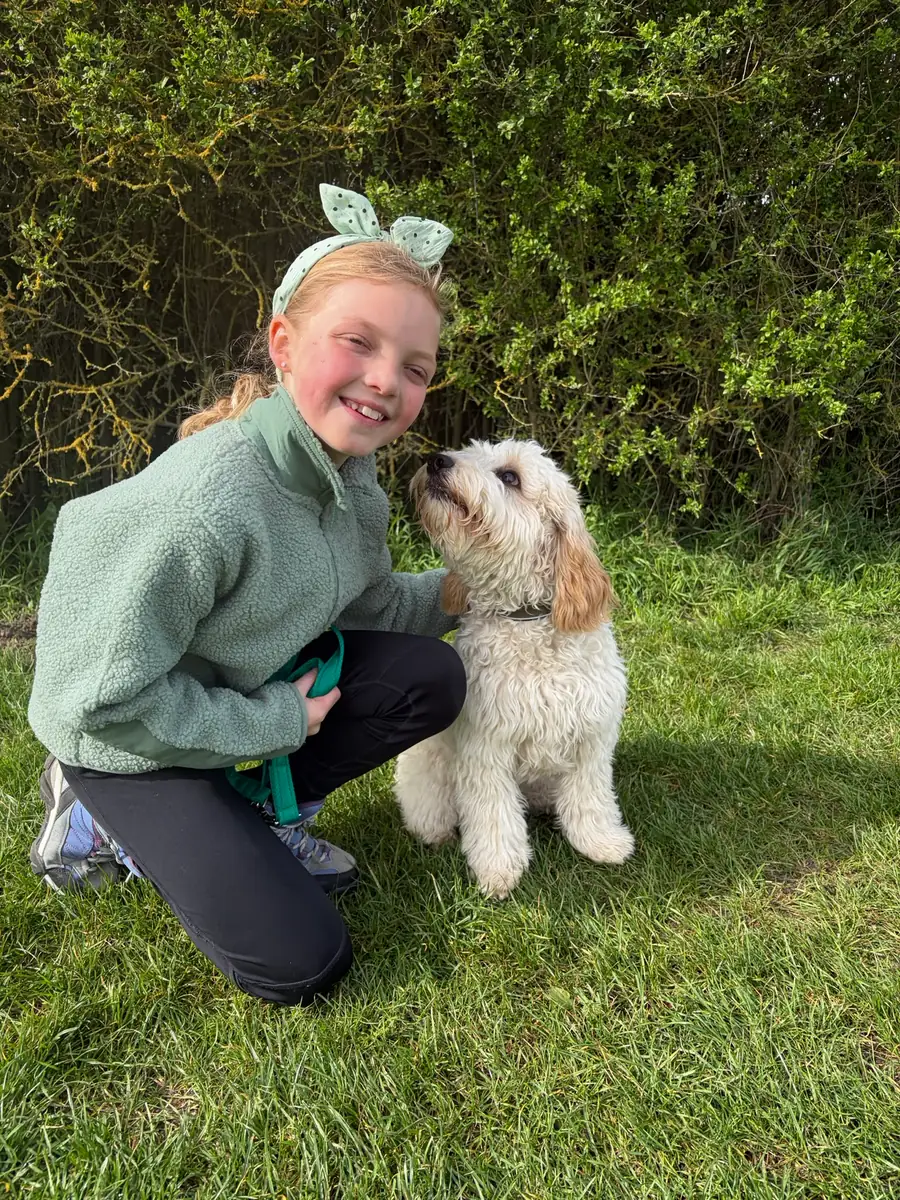
The right setting matters
Good puppy training should help your puppy learn, not just survive the room.
The best choice depends on your puppy's confidence, your daily routine, and what you actually need help with first. Real puppy life matters more than fitting neatly into a class plan.
Use this guide if you are comparing
- Puppy classes near me
- Puppy school or puppy socialisation classes
- One-to-one puppy training at home
- Help with biting, toileting, lead basics, settling, or confidence
6+ years experience 25 five-star Google reviews DBS checked & canine first aid trained
Puppy classes or one-to-one training: which should you choose?
Choose a well-run puppy class when your puppy can cope in a group and you want structured practice around other puppies and people.
Choose one-to-one training first when your puppy is nervous, over-excited, unable to settle, or the problems you need help with happen mainly at home.
It does not have to be one route forever. Some puppies start one-to-one, build confidence and then join a suitable class. Others attend a class and use a private session for a specific problem.
Compare the setting, not just the label
- Trainer attention: shared in a class, focused on your puppy in a one-to-one session
- Environment: a group venue versus your home or local walking area
- Curriculum: set class foundations versus your puppy's immediate needs
- Distractions: useful practice for some puppies, too much pressure for others
- Socialisation: calm exposure matters more than simply being near lots of puppies
Classes suit some puppies
Confident puppies who can cope in a group may enjoy a well-run class. The key is whether the class is calm, reward-based, and suitable for your puppy's stage.
Home support solves home problems
Biting, toilet training, sleep, routines, jumping up, and settling usually make more sense when they are looked at where they actually happen. The goal is clarity, not perfection.
Socialisation is not just play
Good puppy socialisation is about calm exposure, confidence, and recovery. It is not just meeting as many dogs as possible.
Questions to ask before booking a puppy class
- How many puppies are in the group?
- What happens if a puppy is scared or over-excited?
- Are reward-based methods used throughout?
- Is there space between puppies, or is it mostly free-for-all play?
- Will the class help with your actual home-life issues?
What Jennie's 1-2-1 puppy support can cover
One-to-one puppy training can cover biting, toileting, sleep, settling, lead foundations, recall, confidence, gentle socialisation, handling, and the daily routines that make puppy life feel less chaotic.
It can also help owners who searched for puppy classes but realise their puppy needs a quieter, more personal route first.
You should come away understanding what to practise first, why it matters, and how to keep going when real puppy life tests the plan.
When to choose 1-2-1 puppy training first
One-to-one puppy support is a good first step if you want help that starts with your puppy's real life rather than a general class curriculum.
This is nothing to be ashamed of. Some puppies simply learn better when the pressure is lower and the support is shaped around their own routine.
- Your puppy is already struggling with biting, settling, or over-excitement
- You feel unsure about taking your puppy into a busy group
- You want help in your home or local walking environment
- Your puppy is older than the usual class age range but still needs foundations
- You want a plan that your family can actually follow day to day
Ready to talk it through?
Jennie calls every new enquiry back personally to hear about your puppy and confirm whether one-to-one support is the right fit before anything is booked.
Tell Jennie about your puppyWhere to go next
Puppy training Essex
See Jennie's one-to-one puppy foundations support for biting, toileting, settling, lead basics, recall, and confidence.
Puppy biting help
Start here if sharp teeth, clothing grabs, evening chaos, or over-excited mouthing are the biggest issue.
Puppy help in Chelmsford
Use the Chelmsford local page if you searched for puppy classes, puppy school, or puppy training in Chelmsford.
Puppy help in Braintree
Use the Braintree page if you want local one-to-one support with puppy foundations and early behaviour.
Read the Help Hub
Go back to compare other common puppy and behaviour issues.
Ask what fits best
If you are not sure whether a class or one-to-one support is right, Jennie can help you decide.
Puppy Classes FAQs
Does Jennie offer puppy classes?
Jennie focuses on one-to-one puppy training rather than group puppy classes. This means support can be built around your puppy, your home, and the specific early problems you want help with.
Are puppy classes bad for nervous puppies?
Not always, but a busy group can be too much for some nervous puppies. If your puppy is hiding, freezing, barking, or struggling to recover, one-to-one support may be a calmer first step.
Can one-to-one puppy training help with socialisation?
Yes. Socialisation is not just meeting lots of dogs. It is helping your puppy learn calmly around people, dogs, sounds, handling, surfaces, traffic, and everyday life at a pace they can cope with.
What if I searched for puppy school near me?
If you searched for puppy school because you want help with early foundations, one-to-one puppy training may still be a good fit. Jennie can help with the same core life skills, but in a more personal setting.
Still not sure this is the right fit for your dog? Try the quick Help Finder.