
Reactive dogs
If your dog barks, lunges, or feels overwhelmed on walks, support focuses on what is driving the reaction and how to make things feel calmer and more workable again.
I offer behaviour-focused support and puppy training from South Woodham Ferrers, helping owners across Essex with reactivity, barking, lead walking, rescue dog support, and calmer home life.
6+ years experience 27 five-star Google reviews DBS checked & canine first aid trained
If your dog is struggling, that is your dog asking for help.
My job is to help you understand what your dog is telling you, what needs to change, and how to move forward with a clear plan.
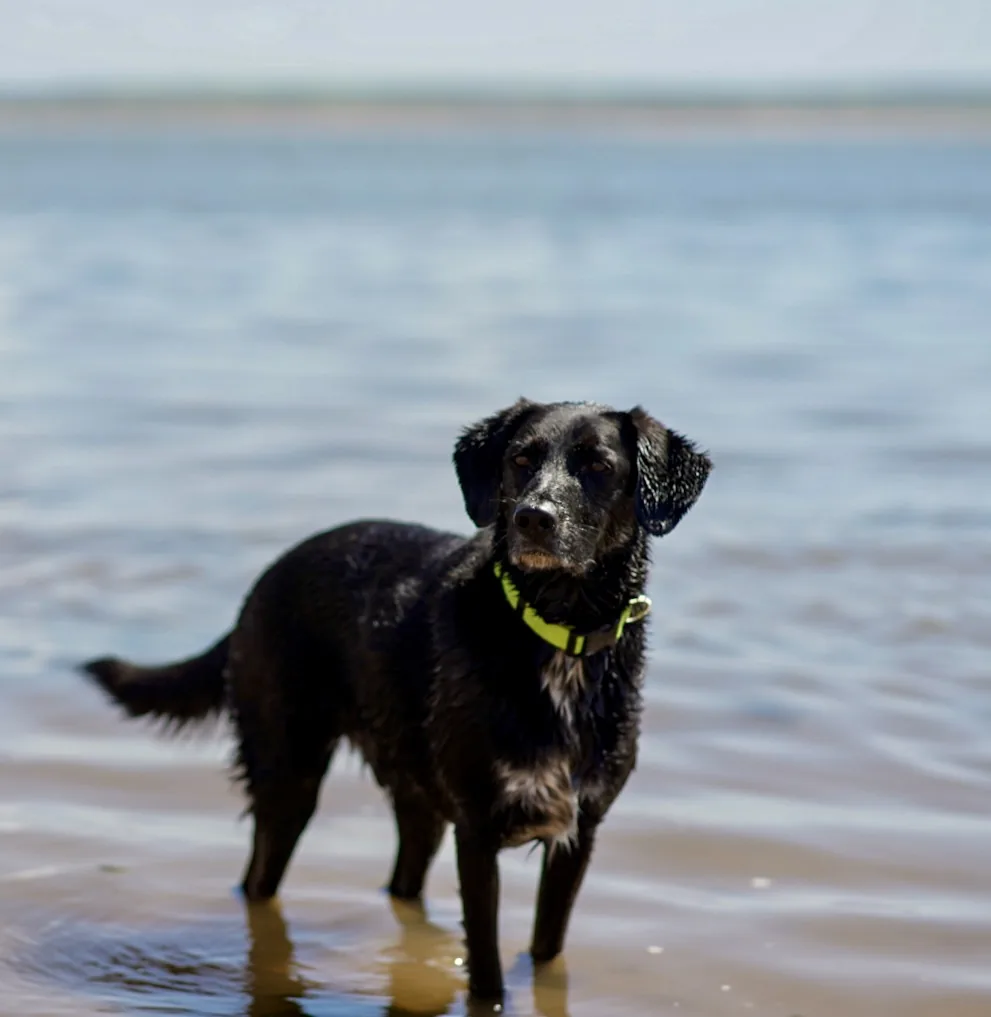
When I rescued Toby, I thought I was bringing home a calm, gentle dog. What I actually brought home was a dog with complex needs I did not yet understand. I was given advice that felt harsh and controlling, and I knew very quickly that it was not the way I wanted to live with my dog.
Meeting a behaviourist who used positive reinforcement methods changed both of us. For the first time, I could see Toby more clearly and understand what he was communicating. He became my greatest teacher, and the reason this work became my calling.
Read about how Jennie supports rescue dog owners across Essex.
Owners often arrive here after searching for a dog behaviourist in Essex, a puppy trainer near me, or help with a dog who is barking, pulling, reacting, or finding home life hard. That usually means they want more than generic advice. They want someone who can look at the real situation and explain it clearly.
That is the part of the work Jennie cares about most. Not just what the dog is doing, but why it is happening, what the dog needs, and what is realistic for the family living with it every day.
Read the guide on how to choose a dog behaviourist if you want a clearer picture of what to look for before booking help.
Facebook is still the main social page and the clearest place to see recommendations, updates, and how owners talk about the support after sessions.
Instagram is better for everyday moments and quieter snapshots behind the scenes. YouTube is the better fit for longer video help as that side grows.
“It was not a straight line that brought me here. Dogs have always been part of my life, but it was living with a dog who had complex needs that changed everything for me. I know what it feels like to be told advice that does not sit right, to feel like you are trying your best, and to still be left unsure what your dog actually needs.”
That is why I work the way I do now. I take the time to listen, look at the whole picture, and explain things clearly, so you do not leave with a handful of instructions and more confusion than when you started.
Jennie Dayer-Swan
Before dogs, Jennie trained riders and worked closely with horses, including a BSc (Hons) Equine Studies degree started at Warwick and completed at Writtle College. It gave her a strong grounding in timing, body language, observation, and reading animals in real environments, all of which applies directly to dogs too.
Practical behaviour-focused experience built on the job alongside an experienced behaviourist as well as through formal study. Behaviour rarely turns up in neat textbook situations. It turns up in family homes, on real walks, and in the moments owners are actually finding hard.
Working towards an Advanced Diploma in Applied Animal Behaviour (Canine) Level 5.
Canine Communication Diploma and Certified Puppy Trainer, both awarded by Centre of Excellence, professional dog walker, fully DBS checked, and trained in canine first aid.
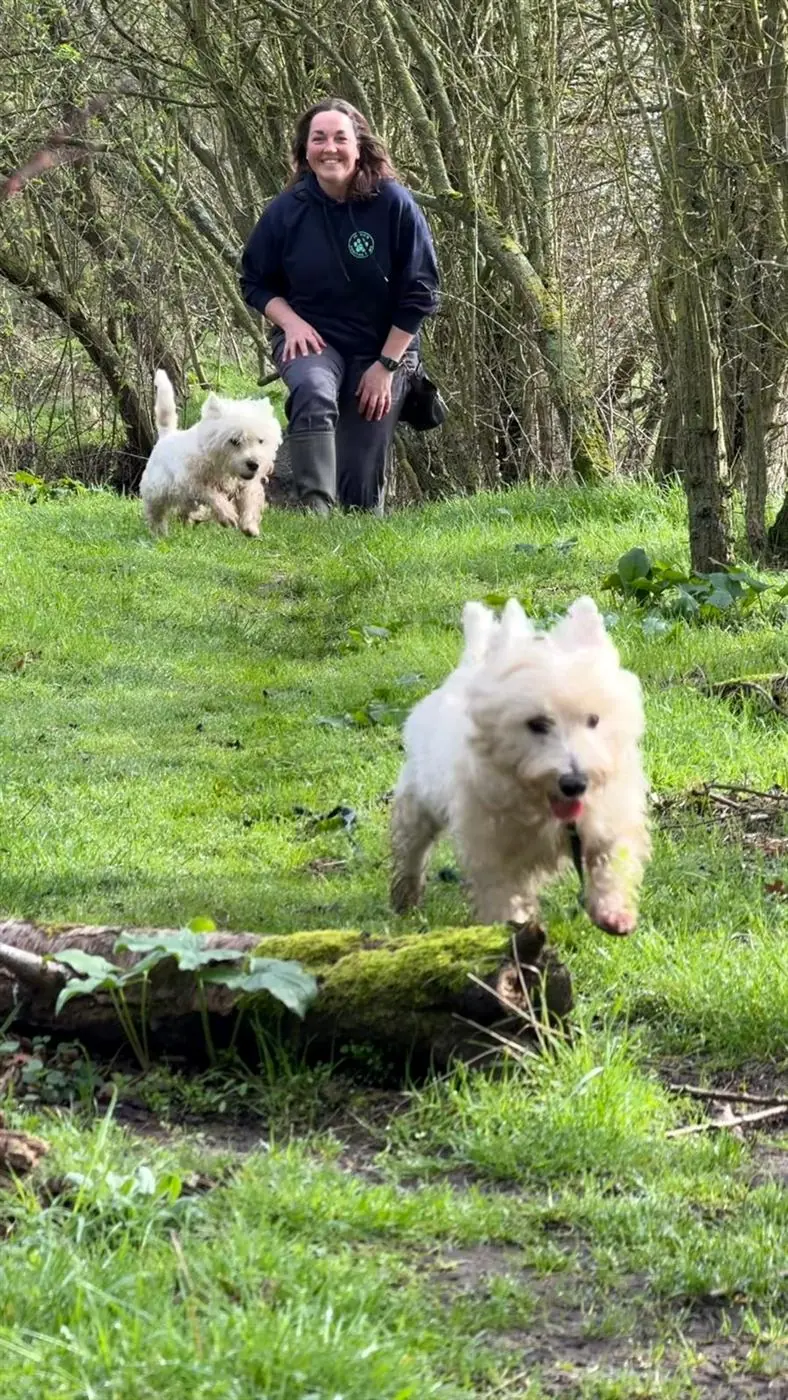
Home visits and walk coaching help owners see what calm, practical progress can actually look like with their own dog.
I use positive reinforcement methods, and I look at the root cause of behaviour, not just the symptom you want to stop. That means looking at routine, body language, thresholds, lead tension, home setup, and the moments that tend to tip your dog over the edge.
I do not believe in making owners feel blamed or dogs feel pressured. I believe in helping you understand what is going on, slowing things down, and building confidence for both of you.
I use calm, supportive, reward-based training methods that help build trust and confidence between dogs and their owners. The aim is not to control your dog through fear or pressure, but to understand what they are finding hard and teach the next step in a way they can cope with.
Where equipment is needed for safety or guidance, I use appropriate, welfare-focused options such as well-fitted harnesses, leads, and head collars where they suit the dog in front of me. Equipment should help everyone feel safer and clearer. It should never be used to cause pain, fear, intimidation, or distress.
I do not use shock collars, prong collars, choke chains, physical corrections, intimidation, or punishment-based training. I work under threshold where possible, read body language carefully, and build plans around your dog's emotional wellbeing as well as the behaviour you want help with.
That matters because owners usually come to me when life already feels stressful. The support should make things feel calmer and more understandable, not add more pressure to you or your dog.
If your dog barks, lunges, or feels overwhelmed on walks, support focuses on what is driving the reaction and how to make things feel calmer and more workable again.
If you have a new puppy and are feeling a bit swamped by biting, routines, toileting, lead walking, or over-excitement, that is exactly the sort of thing I can help you get right early on.
If visitors, barking, rescue dog settling, or alone-time worries are making daily life hard, sessions can start in the home where those problems actually show up.
That is very common. Some owners arrive knowing the exact issue, and some just know that home life or walks have become harder than they should be. You do not need to work it all out before getting in touch.
If you are feeling unsure, start with the guidance pages first, or send a message and I can point you towards the route that fits best.
I use positive reinforcement, reward-based training, and practical management. I work under threshold where possible, build confidence and choice, and never use shock collars, prong collars, choke chains, physical corrections, intimidation, or punishment-based methods.
Yes. I have experience supporting rescue dogs with trauma, uncertainty and reactivity. We go at your dog's pace with gentle, welfare-first plans.
Absolutely. Owner coaching is central to success and I guide you step-by-step so you feel confident continuing at home and on walks.
Yes. With your consent I can share summaries with your vet and work alongside them, especially useful for pain, anxiety, or medication reviews.
Yes. Jennie supports both new puppy owners and older dogs with behaviour struggles. That means families can get help early with routines and foundations, or later when barking, reactivity, lead issues, or home-life stress start to feel harder to manage.
If your dog is struggling on walks, finding home life hard, or you have a new puppy and want to get the foundations right, the next step is simply to start the conversation.
Comparing trainers across Essex? See how Jennie works as a dog trainer in Essex. If you would rather read first, the guidance pages will give you a clearer picture of what might be going on and where to go next.