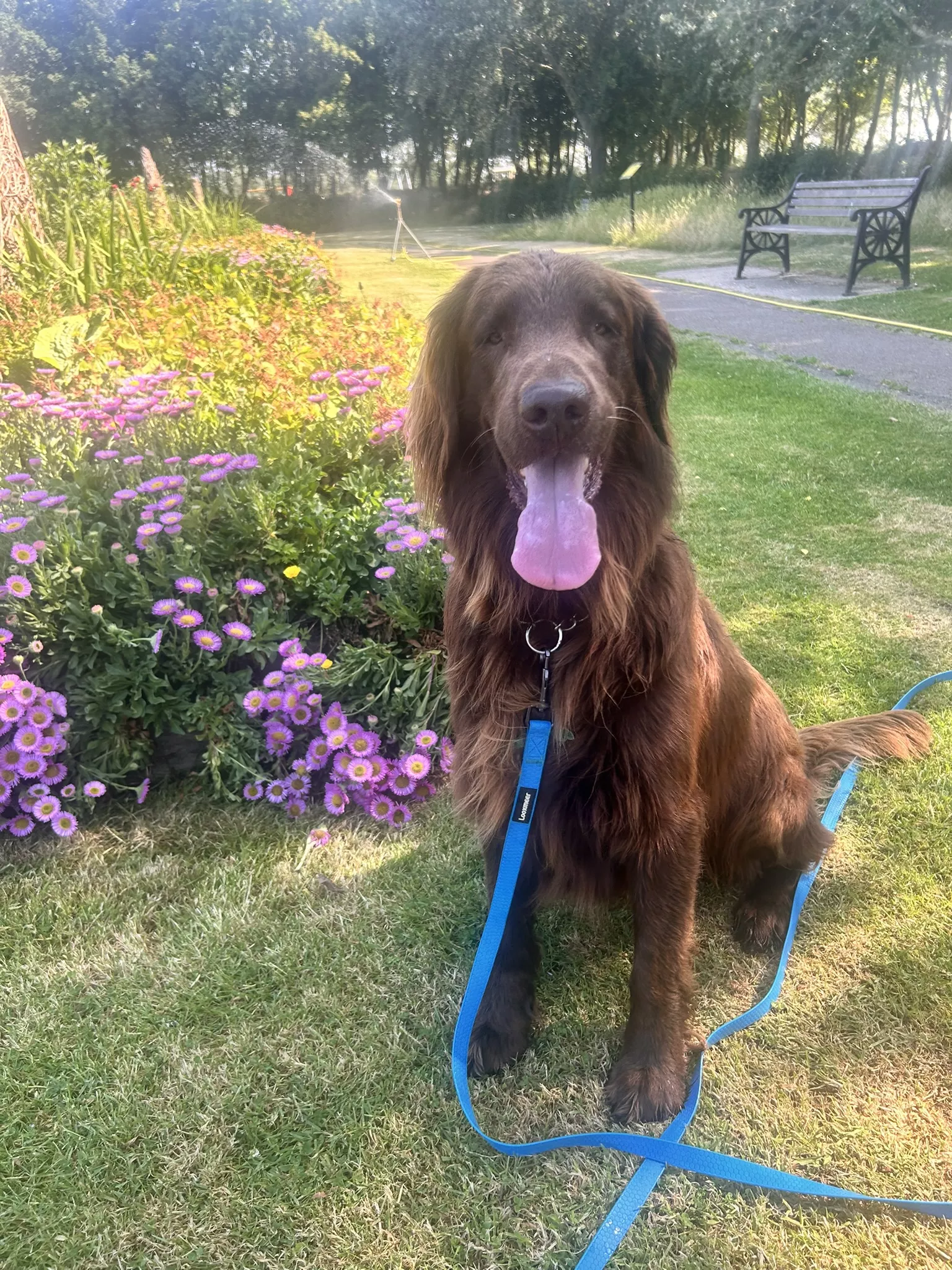
Help for Dogs Barking at Visitors, Strangers, and the Doorbell
If your dog barks, charges the door, or loses it when someone knocks, sees strangers outside, or hears people arriving, it usually means the whole moment feels too big, too exciting, or too worrying. Jennie offers calm one-to-one help in Essex so arrivals and passers-by can start to feel more predictable.
With visitor barking, I always want to know what the whole arrival looks like: where your dog is, what they can see, how quickly people come in, and what happens in the first few seconds. Those details matter because the barking is usually part of a bigger emotional moment, not just a noise problem.
The aim is not to shut your dog down. It is to give them a clearer plan, make arrivals more predictable, and help the whole moment feel less chaotic for everyone in the house.
Visitor barking usually shifts fastest when the doorway plan gets calmer for everyone.
Gates, leads, mat work, food stations, and a clear arrival routine often change the whole picture more quickly than trying to correct barking in the moment.
Visitor barking support can include
Management around the front door, hallway, or living room
Go-to-mat work that fits your actual home setup
Support for barking at knocks, bells, footsteps, or people entering
Calmer arrival routines that are easier for the whole household to follow
6+ years experience·27 five-star Google reviews·DBS checked & canine first aid trained
What helps first
Make space from the door. Gates, leads, room setup, and visitor timing often matter before training exercises do.
Safety first
Go-to-mat work, food stations, or calmer greeting routines give your dog something predictable to do instead of rehearsing door chaos.
A clearer job
Most improvement comes from short, well-managed practice
Calmer arrivals beat repeated chaotic greetings
Home setup usually matters before training drills
If you searched for help with dog barking at visitors or strangers
Your dog starts barking before the visitor even gets through the door
Knocks, footsteps, car doors, or the bell set things off instantly
Your dog also barks at strangers outside the house, through the window, or at the gate
Your dog can look excited one moment and worried the next
Visitors mean scrambling, shouting, grabbing leads, and everyone feeling tense
The barking carries on even after people are sitting down
You want your dog calmer around guests without forcing interaction they are not ready for
Why home-based support helps here
Visitor and stranger barking is one of those issues that often makes far more sense in your own hallway, living room, front garden, or window setup than it ever would in a class. The route the visitor takes, where your dog sees people first, and how much space your dog has can all change the picture.
Jennie helps you build a clear plan for your actual setup so everyone knows what to do before, during, and after the knock at the door, and what to do when your dog spots strangers outside. That tends to make progress feel much more realistic.
If your dog also struggles when left alone rather than just when people arrive, the home-alone guide covers that separately.
If visitors, doorbells, or strangers are setting your dog off, start here.
Visitor barking often needs a calmer doorway setup, safer management, and a clear plan for what your dog should do instead. Tell Jennie what happens when people arrive and how long it takes your dog to settle.
Barking at visitors is communication, not defiance.
A dog who barks at the door is usually telling you something about how they feel when the boundary of their home changes. Understanding which feeling it is, worry, excitement, or wanting space, is what makes the plan work.
What visitor barking support often needs to cover
Before the visitor arrives
We look at management, routine, and how to reduce the build-up around cues like the bell, footsteps, or people approaching the door.
During the greeting
The goal is usually a clearer job, more distance, and less pressure on the dog rather than forcing calm that they do not yet feel.
After the visitor is in
Support often includes mat work, settle routines, food stations, or calmer management so the whole visit does not stay charged and noisy.
What a first visitor-barking plan might include
A calmer setup before anyone rings the bell
A simple station, mat, or distance plan for the first few seconds
Clear instructions for the humans so everyone handles arrivals the same way
Practice sessions that are short enough for your dog to cope with
Written notes so you know what to repeat and what to avoid between sessions
Good progress often looks quieter before it looks perfect
Early wins might be less frantic rushing, faster recovery after the knock, or your dog being able to stay on a mat with support while a guest comes in. That is useful progress because it means the emotional intensity is beginning to shift.
From there, plans can build toward easier greetings, calmer evenings, and less stress for everyone in the house.
Similar home-life cases
Owners dealing with barking felt calmer fast
27five-star Google reviews
Julie TurnerGoogle
“Our dog struggled with constant barking at the front door… thanks to Jennie’s calm guidance I feel more confident.”
barking at the front door and separation anxiety
I’m so grateful for the help we received from Jennie. Our dog struggled with constant barking at the front door, people coming into our home and separation anxiety, we felt totally stuck. Thanks to Jennie’s calm guidance and practical techniques, I feel more confident going forward. I would highly recommend Jennie.
Tiffany ArnoldGoogle
“Within minutes the training and advice had already made a difference.”
Romanian rescue and evening barking
Jennie is actual magic. We have a Romanian rescue who we have trained but her barking in the evenings was getting out of control. There’s so much advice online it’s hard to know what works best. Then enters Jennie and within minutes the training and advice had already made a difference. My husband and I both agree it’s the best money we have ever spent.
Joanna OsbornFacebook
“I saw results from the behaviour almost immediately.”
reactivity and house manners
I recently had a consultation from Jennie as I have two rescue dogs from abroad and was experiencing problems with reactivity and house manners. Jennie was very knowledgeable and helpful and I saw results from the behaviour almost immediately. She explained how to communicate in dog language and it was really interesting. The follow up notes are excellent as a reminder of how to intercept any further problems.
Emma GreenGoogle
“Jennie is super lovely, extremely knowledgeable, and we felt like we learned so much.”
guidance for high-energy family life
Jennie visited us to help us with our lovely but lively 4.5 year old vizsla Evie. We needed advice on how to handle Evie in moments of high energy when she is overcome with emotion. Not only is Jennie super lovely but she is extremely knowledgeable, and in only 2 hours me and my husband felt like we learned so much.
dog barking at visitorsdog barking at strangersdoorbell barkingdog trainer for barkinggo to mathome-based supportvisitor routines
When to get one-to-one help with visitor barking
Some doorbell and visitor barking can be reduced with management and simple routines. These are the signs that one-to-one support will be more effective.
Your dog can't settle even after visitors have been in the house for 20 minutes or more
You're managing visits around the dog — keeping them away, avoiding having people over
Your dog has lunged at or made contact with a visitor
You have children or vulnerable visitors and the behaviour feels unsafe
Door barking is spilling into reactivity on walks or elsewhere in the home
Jennie calls every new enquiry back personally to hear about your dog and confirm whether one-to-one support is the right fit before anything is booked.
Jennie's Positive Paws is based in South Woodham Ferrers and provides one-to-one dog training and behaviour support across Mid and South Essex.
Why does my dog bark so much when visitors arrive?
Visitor barking is often driven by excitement, worry, frustration, or feeling unsure what to do when someone enters the home. The work usually focuses on giving your dog more clarity, more distance, and a calmer plan.
Can this kind of support also help if my dog barks at strangers outside?
Yes. Dogs who bark at visitors often also react to strangers outside the house, at the gate, through windows, or on the approach to the door. The plan can cover both parts so the whole picture feels calmer, not just the moment someone steps inside.
Can go-to-mat training help with visitor barking?
Yes, it can be very useful when it is taught properly and supported with the right management. The key is not just teaching the mat behaviour in isolation, but fitting it into a realistic visitor plan.
What if my dog also barks at the doorbell even when nobody comes in?
That is common. Support can include changing the emotional response to the sound itself, reducing rehearsal, and setting up a calmer routine around the bell or knock.
Do you help with home-based behaviour support across Essex?
Yes. Jennie supports owners across South Woodham Ferrers, Chelmsford, Maldon, Braintree, and nearby Essex areas, with online support available when that is the better fit.
Can you help if I searched for a dog trainer for barking at visitors near me?
Yes. This page is exactly for that sort of issue. Jennie offers one-to-one support across her Essex service area, and because the problem happens at home, the work is built around your real front-door setup rather than a generic class environment.
Still not sure this is the right fit for your dog? Try the quick Help Finder.