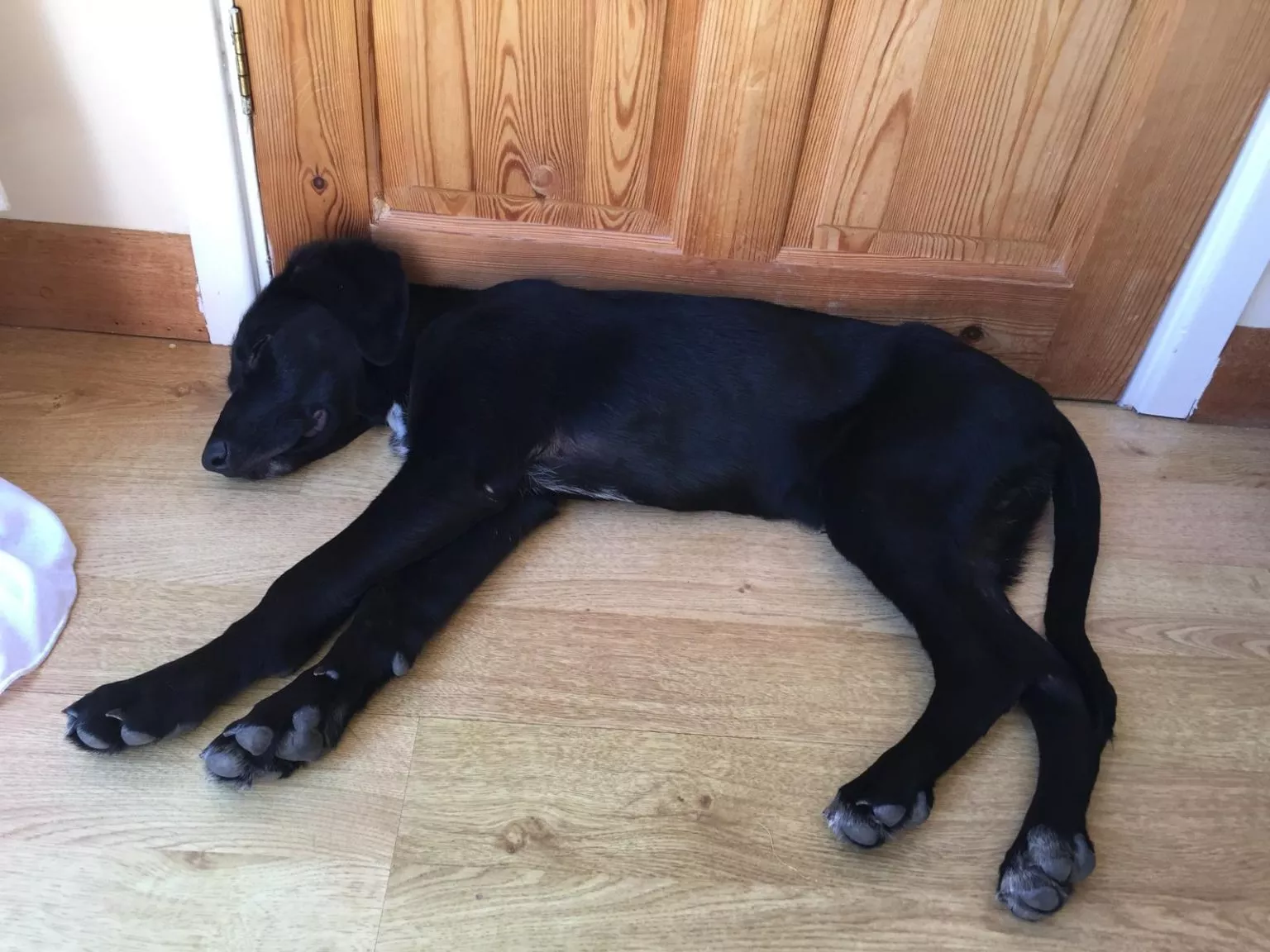
If your dog panics when left alone, barks when you reach for keys, or cannot settle once departures begin, separation work needs to be calm, structured, and realistic from the start.
When owners talk to me about separation worries, they often sound completely worn down before we even get to the training plan. You may be dealing with barking, pacing, panic, toileting, destruction, or a dog who shadows you and unravels the moment leaving cues appear.
This kind of problem needs a plan that protects welfare rather than pushing too fast. The early work is usually about finding a starting point your dog can cope with, then building alone-time confidence in small, careful steps.
Jennie's Positive Paws supports owners across Essex, including South Woodham Ferrers, Chelmsford, Maldon, and nearby areas, with online behaviour consultations also available when that is the best first step for a home-based issue.
Written by Jennie Dayer-Swan, dog behaviour trainer. Published: | Last updated: .
Alone-time supportHome routine planningEssex and online consultations
Separation work begins with calmer routines and a level your dog can actually cope with.
Good progress usually starts with quieter departures, better rest, and a home pattern that stops the stress building before you even begin practising alone time.
Support can include
Routine review and trigger mapping
Low-stress departure and return patterns
Graduated alone-time planning
Management ideas that protect progress while you work through the plan
Clear guidance on what to prioritise first and what to pause for now
6+ years experience·27 five-star Google reviews·DBS checked & canine first aid trained
What matters first
Alone-time problems affect everyday life fast. Owners often feel trapped because simple things like leaving the house, running errands, or going to work become stressful and loaded with guilt.
Why it feels so hard
The aim is not to flood your dog with alone time. It is to find a realistic starting point, reduce panic, and build confidence carefully while helping you understand what is and is not helping.
What the work focuses on
Progress may begin with calmer departures and better routines
Shorter, safer wins still count as real progress
Protecting welfare matters more than rushing the timeline
Signs the issue may be separation-related
Your dog panics when you pick up keys, shoes, or a bag
Barking, whining, howling, or pacing starts quickly after you leave
Toileting happens indoors when they are otherwise house trained
Chewing, ripping, scratching, or other destruction happens while you are out
They lick or chew themselves more when left or when the routine changes
Your dog follows you from room to room and struggles to settle alone
They cannot settle, eat, or play unless you are close by
Greetings are frantic even if you have only been gone briefly
They seem fine with people in the house but not once they are actually left
You are changing plans, skipping errands, or feeling trapped by the routine
If you searched for dog trainers for separation anxiety near me
That usually means you want clear help with a very specific home-life problem, not broad obedience work. Separation support is less about drilling commands and more about understanding what tips your dog into panic, what the routine is rehearsing, and what a realistic starting point looks like.
Recent UK dog behaviour statistics show that separation-related distress is a common owner concern, but the right plan still needs to be based on your own dog's pattern at home.
Because the problem happens around departures and home routine, in-person or online one-to-one support is often a better fit than a standard class. Jennie can help you decide which route makes most sense.
How to check what is really happening
Record a short absence on a phone or camera so you are not guessing
Look at when the behaviour starts, not just what it looks like later
Notice whether barking is brief protest, ongoing panic, outside noise, or frustration
Check whether your dog can relax when you are in another room
Watch how long it takes them to settle after you return
Separation anxiety or something else?
Not every dog who cries or barks when left has true separation anxiety. Some dogs are under-stimulated, some are worried by noises outside, some are frustrated by a barrier, and puppies may simply not have learned how to feel safe alone yet.
That distinction matters because the right plan changes depending on what is actually driving the behaviour. Jennie starts by looking at the pattern rather than blaming the dog or assuming one cause.
The pace matters
This kind of problem needs a plan that protects welfare rather than pushing too fast.
The early work is usually about finding a starting point your dog can cope with, then building alone-time confidence in small, careful steps. Progress that holds is slower than progress that looks fast.
Jennie's three-part separation anxiety approach
1
Foundations
Build confidence
Confidence work starts in tiny everyday moments. That might mean invitation-only lap time, brief calm separations inside the house, a dog learning to rest in their own space, or other family members taking part in care so the attachment does not sit on one person only.
2
Daily routine
Change the routine
Departures and returns need to become less loaded. Jennie often looks at low-fuss leaving, changing key-and-shoe routines, using a smaller defined space, and building short absences slowly so the dog is not rehearsing panic.
3
Progress
Reward calm
The dog needs to learn that settling, resting, and being calm in their own space are worth doing. That means rewarding calm through the day, not only trying to fix the moment when everyone is already stressed.
Confidence does not mean pushing your dog away
Dogs do not understand why we leave. If your dog feels unsafe when you disappear, that distress is real. The work is not about being cold or withdrawing affection. It is about helping your dog build small pieces of independence so they do not need you in sight every second to feel secure.
That can include little separations while you make a cuppa, go to the bathroom, or move between rooms without inviting your dog to follow every time. For some dogs, it also means gradually moving sleep arrangements so they have their own safe resting space.
Routine changes that often help
Leave with little or no fuss, without big goodbyes
Avoid trigger phrases your dog has learned before departures
Use a smaller safe area rather than giving full run of the house
Use radio or TV calmly if outside noises are part of the problem
Pick up keys or put shoes on, then sit back down, so cues lose their power
Build absences gradually and vary the routine so it is less predictable
Coming home matters too
Many owners naturally want to comfort their dog the second they walk in. I understand why. But for some dogs, a huge reunion can keep the whole leaving-and-returning pattern emotionally charged.
Jennie usually recommends keeping returns low-key until the dog is calmer, then acknowledging calm behaviour gently. Very excitable dogs can take a surprisingly long time to settle after you come back, sometimes up to 40 minutes, so the return routine is part of the plan too.
When toys, music, treats, and Kongs help
Calming products, food toys, background sound, or chews can help some dogs as part of a wider plan. They are not wrong. They just should not be treated as the whole answer if your dog is panicking.
If a dog is too distressed to eat, play, or settle when you leave, the starting point usually needs to be easier. The goal is to build safety first, then use enrichment in a way the dog can actually benefit from.
Rescue dogs, new dogs, and older dogs
Rescue dogs and newly adopted dogs often need careful handling around alone time. They may not know the house yet, may have had a lot of change, or may have learned that people leaving is frightening. Older dogs can also start struggling because of pain, sensory changes, routine disruption, or health worries.
This is why Jennie does not treat every case as a standard training problem. Sometimes the kindest first step is to slow down, check health, and build a routine that makes the dog feel safer before asking for longer absences.
Crates and small spaces
A crate, pen, kitchen, or smaller safe area can help some dogs settle because the space feels predictable. But a crate is not automatically calming. If your dog cries, panics, or tries to escape when crated, the crate needs to be introduced much more carefully or paused while the bigger anxiety picture is reviewed.
For dogs who already like a crate, covering it and keeping it as a rest cue may help. For dogs who find confinement scary, forcing it can make the problem worse.
Medication and vet support
Some dogs need veterinary support alongside behaviour work, especially if the distress is severe, sudden, or not improving. A vet can check pain, health, and anxiety, and can talk you through whether medication or other support is appropriate.
Jennie does not prescribe or advise on medication, but she will always support a welfare-first plan. If medication is part of the picture, it should sit alongside careful routine changes and confidence-building, not replace them.
Leaving your dog while you work
Puppies should not be left for long stretches, and many young dogs need much shorter absences than owners hope at first. If you are out for more than 4 to 5 hours, Jennie's practical view is to arrange someone trusted to pop in, break up the day, and protect the dog's welfare.
If leaving your dog is becoming stressful, get a realistic starting plan.
Separation support can start online or in person depending on your dog's pattern at home. Tell Jennie what happens when you leave, how long your dog copes for, and what you have already tried.
That is one of the most common questions owners ask, and the honest answer is that improvement is usually built rather than rushed. Many dogs can make strong progress, but the pace depends on what is driving the panic, how long it has been happening, and how protected the baseline can be while the plan is going on.
The goal is not to test whether your dog can cope yet. It is to help them feel safer, more settled, and less overwhelmed around departures so alone time stops feeling like a crisis.
What can cause separation-related problems?
There is not always one simple reason. Sometimes it follows a big routine change, illness, moving house, rescue adjustment, a stressful event, or a dog who has never learned to feel safe being left. In other cases it sits alongside general anxiety, poor rest, or a home pattern that keeps stress high.
That is why support needs to start with the dog in front of you rather than a one-size-fits-all tip list or product recommendation.
How separation support usually starts
Map the pattern
Look at the routine, departure cues, recovery time, and the exact point your dog starts to struggle so you are not guessing.
Protect the baseline
Reduce avoidable stress where possible and build a setup that gives your dog more chance of coping before you ask for harder alone-time practice.
Build from what is realistic
Start at a level your dog can manage, then grow the plan gradually instead of testing how long they can endure being overwhelmed.
Home-life behaviour feedback
Clear plans help owners feel less stuck
27five-star Google reviews
Julie TurnerGoogle
“Thanks to Jennie’s calm guidance and practical techniques, I feel more confident going forward.”
barking, visitors, and separation anxiety
Our dog struggled with constant barking at the front door, people coming into our home and separation anxiety, and we felt totally stuck. Thanks to Jennie’s calm guidance and practical techniques, I feel more confident going forward. I would highly recommend Jennie.
Elise SwanGoogle
“The simple but effective tools and tips were showing instant results.”
separation anxiety, pulling, and impulse control
I approached Jennie asking for help with Judge my Cavapoochon who was showing high separation anxiety, pulling on the lead and general low impulse control. Jennie was able to help within minutes of meeting. She instantly understood Judge and how best to correct the behaviours. The simple but effective tools and tips she gave were showing instant results.
Joanna OsbornFacebook
“The follow up notes are excellent as a reminder of how to intercept further problems.”
house manners and rescue dogs
I recently had a consultation from Jennie as I have two rescue dogs from abroad and was experiencing problems with reactivity and house manners. Jennie was very knowledgeable and helpful and I saw results from the behaviour almost immediately. The follow up notes are excellent as a reminder of how to intercept any further problems.
Emma GreenGoogle
“Jennie is extremely knowledgeable, and in only 2 hours we felt like we learned so much.”
family life and high-energy routines
Jennie visited us to help us with our lovely but lively 4.5 year old vizsla Evie. We needed advice on how to handle her in moments of high energy when she is overcome with emotion. Not only is Jennie super lovely but she is extremely knowledgeable, and in only 2 hours we felt like we learned so much.
dog separation anxietysigns of separation anxiety in dogsbarking when left alonedog cries when left alonerescue dog separation anxietywill separation anxiety go awaycan I leave my dog alonedeparture cuesalone-time traininghome routine supportonline behaviour consultation
Separation anxiety support in Chelmsford
If you are in Chelmsford or a nearby area and your dog is struggling with being left alone, Jennie can visit you at home to map the routine together and build a plan that fits what is actually happening.
Because separation problems are so tightly tied to home routine, departure cues, and the specific setup of the house, in-person support in Chelmsford is often the most effective way to get a clear picture before anything practical begins. Online consultations are also available when that is the better starting point.
What separation support in Chelmsford typically covers
Routine review and departure cue mapping
Finding a realistic starting point your dog can cope with
Calmer home patterns that reduce stress before departures begin
Alone-time plans built around your actual schedule
Follow-on guidance so progress does not unravel between sessions
Home-based support in the Maldon area
Jennie covers Maldon, South Woodham Ferrers, and the surrounding villages, which means sessions can happen in the home where the problem is actually occurring rather than in a class or unfamiliar setting.
Rescue dogs still adjusting in a Maldon home
Dogs who have started struggling since a routine change or a move
Owners who need a plan that works around a full working week
Separation anxiety support in Maldon
For owners in Maldon and the surrounding area, separation support starts in the home and builds from there, with the dog's real routine and home setup at the centre of the plan rather than a generic template.
Online consultations also work well as a first step when you want thorough guidance before committing to in-person sessions, or when mapping the home pattern carefully is the best starting point.
When to get one-to-one help with separation anxiety
Mild departure stress can sometimes improve with a careful, gradual approach at home. These are the signs that one-to-one support will make a bigger difference.
Your dog can't be left at all, even for a few minutes, without significant distress
Barking, destruction, or toileting happens every time you leave
You've tried gradual departures and there's been no real improvement
A neighbour has raised it or you're getting noise complaints
You can't get to work or appointments without leaving the dog in distress
Jennie calls every new enquiry back personally to hear about your dog and confirm whether one-to-one support is the right fit before anything is booked.
Jennie's Positive Paws is based in South Woodham Ferrers and provides one-to-one dog training and behaviour support across Mid and South Essex.
Can separation anxiety improve with a gradual plan?
Yes. Most progress comes from realistic starting points, careful changes to routine, and building alone-time confidence in a way your dog can cope with, rather than forcing longer absences too soon.
Will my dog's separation anxiety go away on its own?
Usually it needs a proper plan rather than hoping the dog will simply grow out of it. Many dogs can make very good progress, but the work normally involves calmer routines, realistic alone-time steps, and stopping the panic from being rehearsed over and over.
What if my dog barks or panics as soon as I pick up my keys?
That is a common early trigger. Support can help you break down departure cues, reduce anticipation, and create a calmer overall pattern around leaving the house.
What causes separation anxiety in dogs?
It can follow routine changes, stressful events, rescue adjustment, illness, time away from the owner, or a dog simply never having learned to feel safe alone. Sometimes it also sits alongside wider anxiety or difficulty settling in the home.
Is online support useful for separation problems?
Often yes. Because separation-related issues are so tied to home routines, online consultations can be a strong way to assess the situation and build a practical plan without adding extra pressure.
Why does my dog cry, bark, or howl when left alone?
Crying, barking, howling, or whining can mean your dog is distressed, frustrated, worried by outside sounds, or not yet confident being alone. The useful first step is to record what happens and look at when it starts, how intense it is, and how quickly your dog recovers afterwards.
What are the symptoms of separation anxiety in dogs?
Common signs include barking, whining, howling, pacing, toileting, destruction, excessive licking or chewing, obsessive following, frantic greetings, and being unable to settle, eat, or play without the owner nearby.
How do I help a rescue dog with separation anxiety?
Start gently. Rescue dogs may need time to feel safe in the home before alone-time work can move forward. Keep routines predictable, avoid forcing long absences, build tiny separations first, and get help if the distress is severe or you feel stuck.
Should I crate train a dog with separation anxiety?
Only if the crate genuinely helps your dog feel safe. Some dogs settle better in a small, defined space, but others panic when confined. If your dog cries, scratches, drools, or tries to escape in the crate, pause and get the wider anxiety picture reviewed.
Can medication help dogs with separation anxiety?
For some dogs, medication from a vet can be part of a welfare-first plan. Jennie cannot prescribe or advise on medication, but she may suggest speaking to your vet if the distress is severe, sudden, or not improving with careful behaviour work.
Do calming products or supplements fix separation anxiety?
Sometimes products can support a wider plan, but they rarely solve the root problem on their own. The main work is still about reducing panic, changing routines, and building alone-time confidence at a level your dog can manage.
How long can I leave my dog alone?
It depends on the dog's age, confidence, health, training history, and routine. Puppies should only be left for short periods, and if you are out for more than 4 to 5 hours, Jennie recommends arranging for someone trusted to pop in. For the fuller workday answer, read the home-alone working day guide.
Do you help owners in Essex with home-based alone-time plans?
Yes. Jennie supports owners across her Essex service area, including South Woodham Ferrers, Chelmsford, Maldon, and nearby towns, as well as remote clients who need online support.
Can you help if my dog barks when left alone rather than just looking sad?
Yes. Barking, howling, pacing, and frantic behaviour after you leave can all sit within the same separation-related picture. The goal is to understand what the barking is linked to and build a calmer, safer plan from there.
Is separation anxiety support better in person or online?
It depends on the case, but both can work well. Because the problem is so tied to home routine, online sessions are often genuinely useful for planning and coaching, while in-person support can help when the household setup or wider behaviour picture needs to be seen directly.
Still not sure this is the right fit for your dog? Try the quick Help Finder.