
Resource guarding help in Essex
Calm support for dogs guarding food, toys, spaces, beds, or anything else that feels valuable to them.
Resource guarding can feel unsettling because it often shows up around everyday things. The good news is that it is communication. Your dog is telling you something about safety, predictability, and how they feel about losing access to something important.
If you searched for help because your dog growls over food, stiffens around toys, guards the sofa, or becomes tense when people come close to valued items, Jennie can help you make the setup safer and build a calmer plan from there.
Jennie is based in South Woodham Ferrers and supports owners with resource guarding across Essex, including Chelmsford, Maldon, Braintree, and nearby areas. Online consultations are also available for owners who want to start with safety planning before an in-person visit.
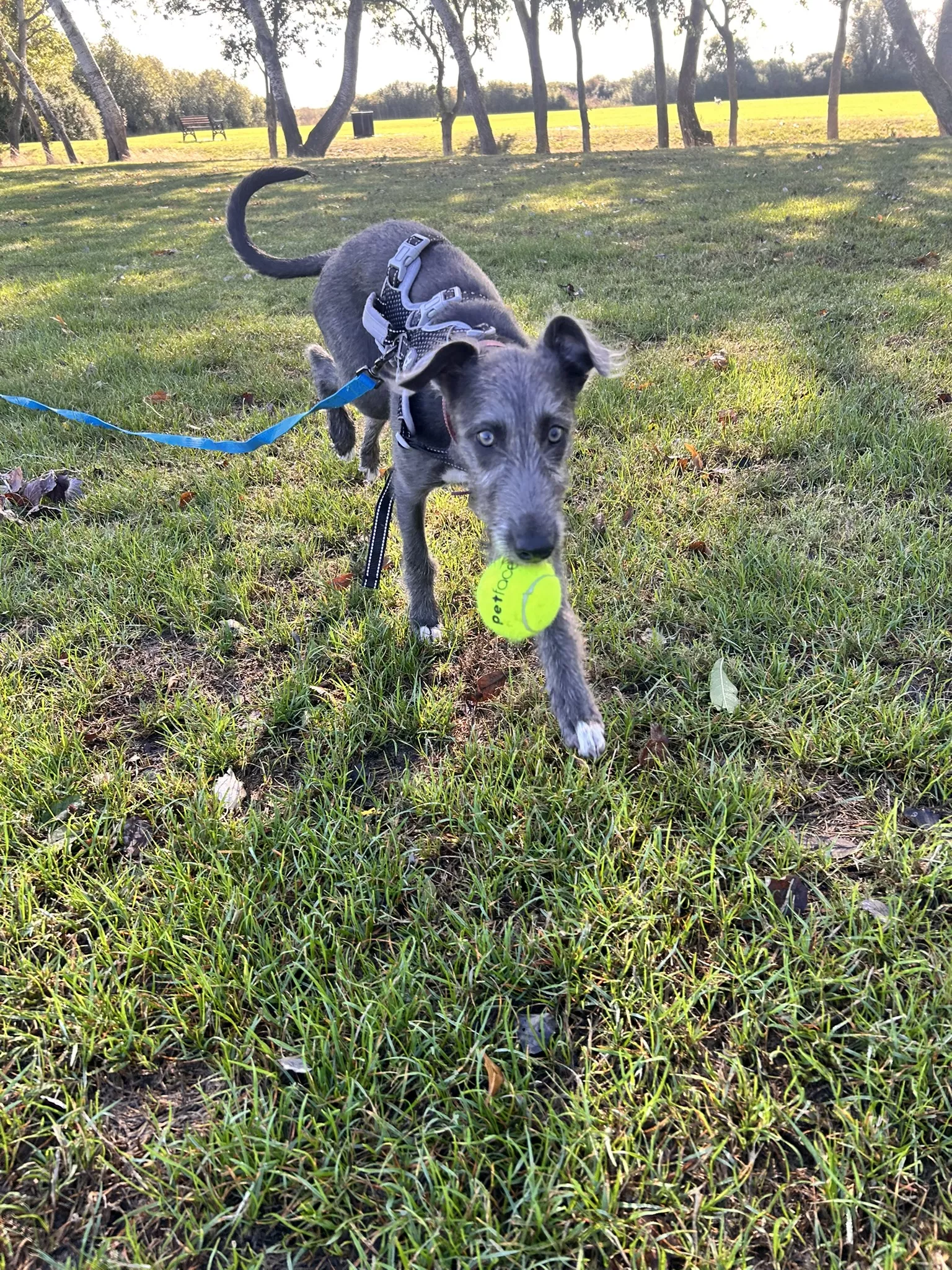
Safety around valued things
Guarding work often starts by making food, toys, and spaces feel less under threat.
Safer routines, less pressure, and better predictability usually help more than proving a point, especially when your dog is worried about losing something important.
Guarding can involve
- Food bowls, chews, and treats
- Toys or found items on walks
- Sofas, beds, resting spaces, or doorways
- Growling, freezing, hard staring, snapping, or rushing in
6+ years experience 27 five-star Google reviews DBS checked & canine first aid trained
Guarding support starts by reducing pressure, not by proving a point.
The aim is not to prove a point to your dog. It is to reduce pressure, improve predictability, and help your dog feel less need to defend what matters to them in the first place.
That is why the best early work often looks calm and practical: safer routines, clearer management, and changing the emotional picture before conflict becomes a bigger habit.
If you searched for resource guarding help
- Your dog freezes, growls, or hard-stares around food or chews
- Toys or found items on walks become difficult to approach
- Your dog guards a sofa, bed, doorway, or resting place
- You feel nervous because the behaviour seems to appear quickly
- You want a safer plan without making the guarding worse
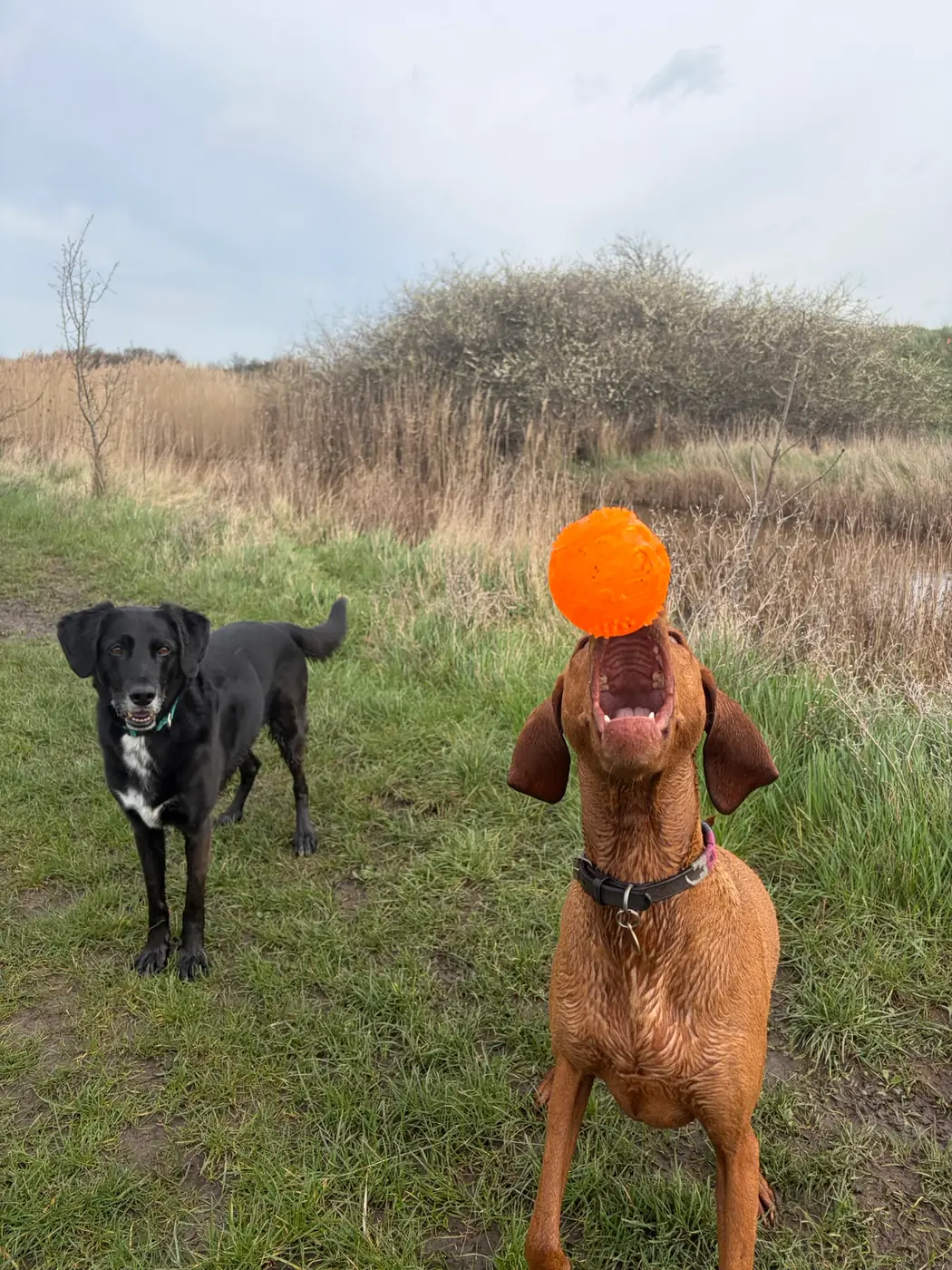
Toys, balls, chews, and found items can all feel important to a dog.
Good guarding support looks at how to make those moments safer and less pressured rather than forcing a confrontation.
It is not stubbornness
Guarding is often about fear of losing something, not a dog trying to dominate the household. That is why taking things away by force usually makes it worse rather than better.
Management matters early on
The first step is often changing the set-up so the behaviour is not repeatedly rehearsed. That can include feeding routines, space, family handling, and how valued items are managed.
Small changes can help quickly
For many dogs, progress begins with feeling less pressured around the guarded item. That can shift the whole picture before you even get into the deeper training plan.
What we often work on first
- Exactly what your dog guards and in which situations
- How close people are getting and what pressure your dog may be feeling
- How to keep everyone safe while new patterns are introduced
- How to stop accidental rehearsals around food, toys, and space
- How to build trust and predictability instead of conflict
What usually does not help
Telling a dog off, testing them, grabbing the item, or repeatedly pushing into the guarded space usually adds more pressure. If you are feeling nervous around your dog's guarding, that matters too. The plan needs to help you feel clearer and safer, not more on edge.
Where children are involved, or the behaviour feels intense, management needs to become a priority straight away.
If guarding is making home life tense, get help before it escalates.
Resource guarding needs careful handling, safer routines, and less pressure around the things your dog values. Tell Jennie what your dog guards and what happens when someone approaches.
Guarding is a dog saying they are worried about losing something, not a dog being dominant.
That is why taking the item away, telling the dog off, or reaching in to prove a point tends to make guarding worse. The work is about making your approach predict good things rather than loss.
Safety and management come first
Reduce pressure
Stop repeated approaches, forced item removal, and situations that keep proving to your dog that guarding is necessary.
Protect people and dogs
Management matters more when children, visitors, or multiple dogs are in the picture and the household needs a clear safer routine.
Build trust gradually
Progress usually starts with your dog feeling safer around people near valued items, not with dramatic tests or challenges.
When to get one-to-one help with resource guarding
Mild guarding can sometimes be reduced with careful management. These are the signs that one-to-one support is the safer and more effective route.
- Your dog has snapped, growled with clear intent, or bitten over an item
- You can't approach your dog while they're eating or holding something
- Guarding is spreading to furniture, rooms, or specific people
- Children or vulnerable family members are in the household
- You're managing around the dog constantly to avoid triggering a reaction
If any of these apply, one-to-one dog behaviour support in Essex is the safer and more reliable route than managing alone.
Ready to talk it through?
Jennie calls every new enquiry back personally to hear about your dog and confirm whether one-to-one support is the right fit before anything is booked.
Jennie's Positive Paws is based in South Woodham Ferrers and provides one-to-one dog training and behaviour support across Mid and South Essex.
Tell Jennie about your dogWhere to go next
Dog behaviour training Essex
The main route for one-to-one support when guarding is part of a wider behaviour picture.
Open behaviour supportDog aggression help
Read this next if the behaviour feels more intense, more unpredictable, or more worrying around people or dogs.
Read the guideOnline behaviour consultations
A good place to start if the issue is mostly at home and you want coaching before an in-person visit.
Open online supportBarking at visitors
Useful if the hardest moments happen around arrivals, space, and people coming into the home.
Read the guideLocal support in South Woodham Ferrers
Use the local page if you want to see how Jennie works in and around her home-base area.
See local pageResource guarding help in Chelmsford
See the Chelmsford area page for local one-to-one support with home-based behaviour including guarding.
See local pageResource guarding help in Maldon
Use the Maldon page if you are based nearby and want in-home support with food, toy, or space guarding.
See local pageResource guarding help in Braintree
Explore the Braintree area page for local behaviour support with guarding and other home-life challenges.
See local pageTalk it through with Jennie
If you are unsure how serious the behaviour is or what to change first, Jennie can help you work that out.
Ask Jennie firstResource guarding FAQs
Is resource guarding common?
Yes. Many dogs guard to some degree, especially around food, toys, space, or valued items. The important thing is to recognise it early and avoid making it more pressured.
Should I take the item away to show my dog I am in charge?
No. Repeatedly removing items by force often increases guarding because it confirms to your dog that losing the item is a real risk.
Can guarding happen around sofas or beds too?
Yes. Guarding can involve space, resting spots, people, and movement around the home, not just food and toys.
Can Jennie help with guarding in a family home?
Yes. Jennie can help you put safer routines and clearer handling in place, which is especially important when there are children or multiple dogs involved.
What if my dog guards from another dog or from children?
That needs taking seriously. The first priority is safety and preventing further rehearsal, then building a management and training plan that reduces pressure in the home. If children or multiple dogs are involved, that clearer structure becomes even more important.
Should I start with online support or an in-person session for guarding?
It depends on the case. Online support can work well for routine review and initial safety planning, but when guarding is more established or the household setup needs seeing properly, Jennie may suggest one-to-one in-person behaviour support first.
Still not sure this is the right fit for your dog? Try the quick Help Finder.