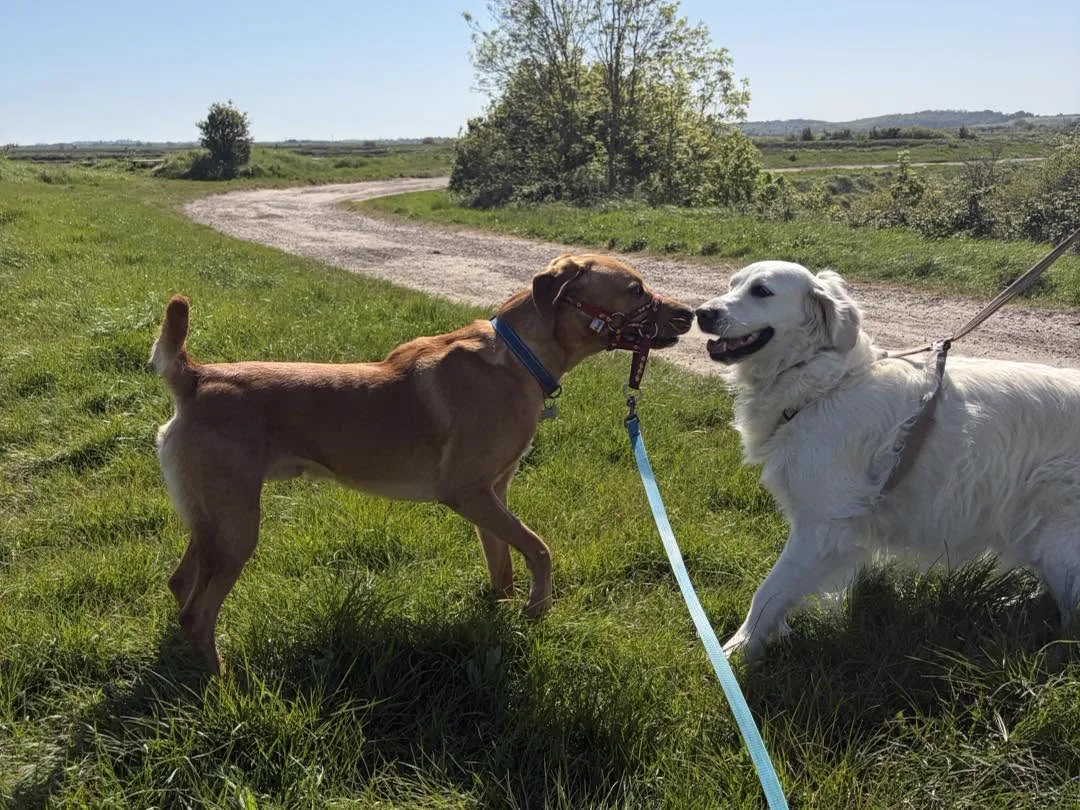
Lunging often starts earlier than it looks
Many dogs show changes in pace, stare, body tension, breath, or ear position before the actual lunge happens. Catching those earlier signs changes a lot.
If your dog suddenly lunges at other dogs on walks, this page is for you.
Lunging can feel frightening, embarrassing, and exhausting, especially when it seems to happen in a split second. One minute the walk feels fine, and the next your dog is pulling hard, barking, twisting, or exploding at the end of the lead. That does not mean your dog is being dramatic on purpose. It usually means the moment has already become too much.
Jennie offers calm one-to-one support across Essex, including South Woodham Ferrers, Chelmsford, Maldon, and nearby areas, helping owners understand why the lunging happens and how to build steadier, safer, more manageable walks.
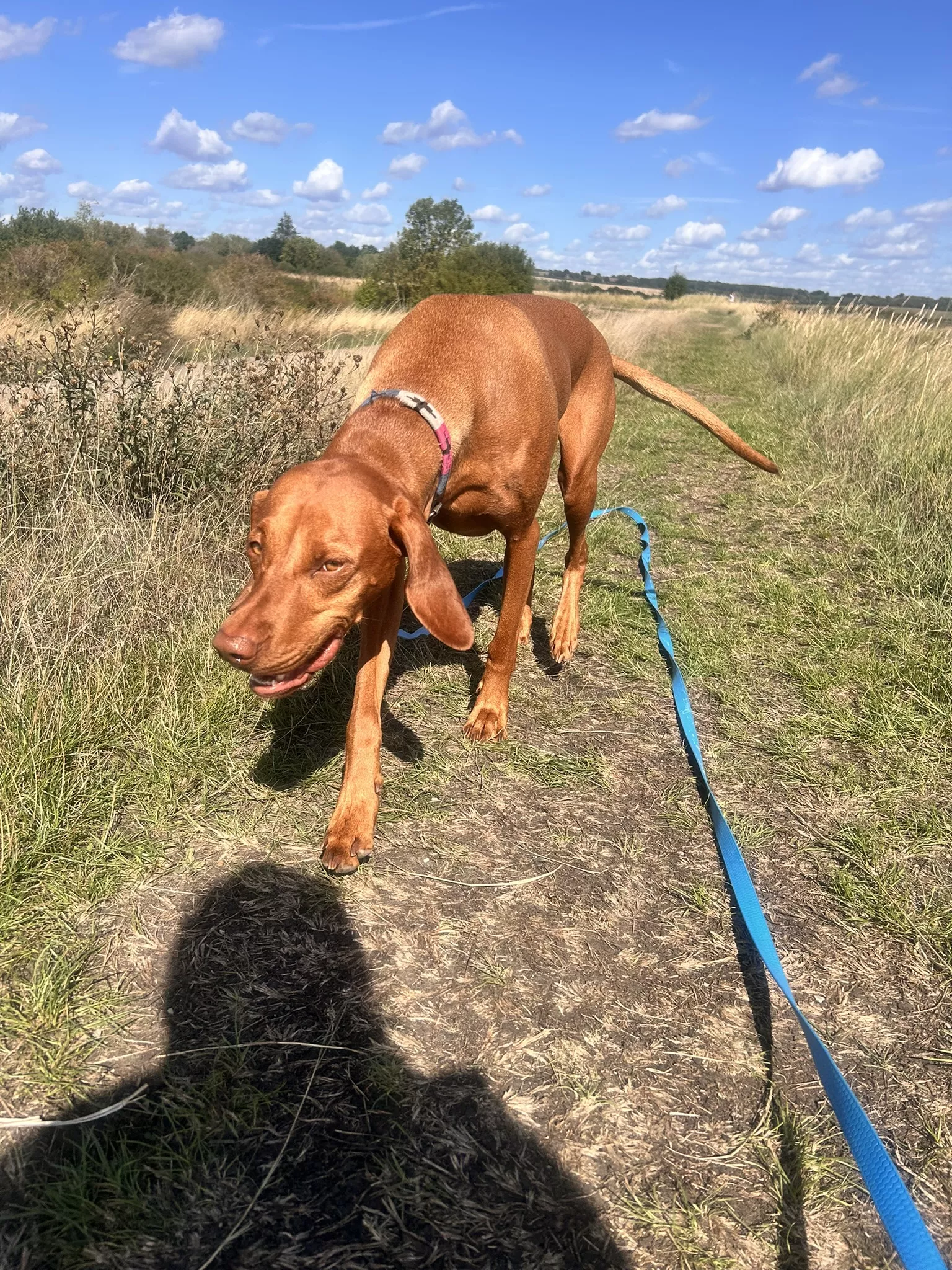
Slow the build-up first
Route choice, spacing, timing, and calmer movement all matter. Once the dog is already over threshold, the whole picture gets much harder to change in the moment.
6+ years experience 27 five-star Google reviews DBS checked & canine first aid trained
Lunging is often part of the wider reactive picture. For some dogs it comes from worry, for others frustration, over-arousal, lack of space, or a lead setup that makes them feel trapped. What matters is not just the lunge itself, but what is building underneath it.
That is why the goal is not simply to stop the visible movement. It is to understand the whole pattern and lower the pressure that keeps driving it.
Many dogs show changes in pace, stare, body tension, breath, or ear position before the actual lunge happens. Catching those earlier signs changes a lot.
When both ends of the lead are already tense, the dog often feels even less able to make a calmer choice once another dog appears.
Good support helps you know where to stand, when to move, when to reward, and when to create more space instead of trying to think under pressure.
Lunging support moves in a clear order rather than jumping straight to the hardest setups. Each stage makes the next one more possible.
How close another dog can be before your dog starts to load up, so you are working at a distance they can actually cope with.
What the earliest signs of lunging look like in your dog, because the moment nearly always starts before the visible lunge.
Which routes, corners, or setups are making walks harder than they need to be, and what can be changed straight away.
How to move sooner and more smoothly instead of waiting for a blow-up and then trying to recover from it.
How to make calmer check-ins and disengagement more likely, so your dog has a better option than reacting.
Support may begin with a behaviour consult at home, then move into assisted lead walks or structured follow-ups outside if the main issue is happening on walks. That way, you are not just talking about the problem. You are getting coached in the situations that are actually hard.
For many owners, the first big relief is simply feeling clearer about what to do before the lunge happens instead of trying to recover afterwards.
Dogs who lunge at other dogs often need a mix of behaviour support, safer route choices, and practical lead work. Tell Jennie what your dog does, how close the triggers are, and what you have already tried.
You notice the build-up sooner and create space before your dog tips into a full lunge.
Your dog may still react sometimes, but the recovery gets quicker and the whole walk is not lost afterwards.
Walks start to feel more planned, less dread-filled, and more possible again, even before they feel easy.
Early, mild reactions to other dogs sometimes settle with distance and management. These are the signs that one-to-one support will be the more effective route.
If any of these apply, one-to-one dog behaviour training in Essex is usually the most effective route — lunging that's escalating rarely improves without a structured plan.
Jennie calls every new enquiry back personally to hear about your dog and confirm whether one-to-one support is the right fit before anything is booked.
Jennie's Positive Paws is based in South Woodham Ferrers and provides one-to-one dog training and behaviour support across Mid and South Essex.
Tell Jennie about your dogUse this if lunging sits within a wider on-lead reactivity picture and you want the broader explanation too.
Often the best next route when the hardest part is happening outdoors and you want coaching on real walks, not just advice indoors.
Start here if lunging is part of a bigger behaviour picture and you want a more complete one-to-one plan first.
Use the Chelmsford page if you want local one-to-one behaviour support there for walk-based struggles.
Explore the Braintree page if you are nearby and want calmer support with reactivity, lunging, and steadier walks.
Use the Maldon page if you are in or around Maldon and want local one-to-one support for lunging and walk struggles.
Use the Southend page if you are in the SS area and want local support for busy-environment and walk-based struggles.
If lunging at dogs is making every walk feel stressful, Jennie can help you work out the calmest and safest route forward.
Lunging is often part of reactivity and can come from worry, frustration, over-arousal, lack of space, or feeling trapped on the lead. The visible lunge is usually the end of a build-up, not the beginning of the problem.
The work usually starts by changing distance, route choice, timing, and handling before the dog tips over threshold. It is less about correcting the lunge afterwards and more about changing what leads up to it.
Not always. Lunging can look dramatic, but it often sits within fear, frustration, or reactive overwhelm rather than straightforward aggression. The body language and full context matter.
Yes, they can be a very good fit when the main struggle is happening on walks. They give owners real-time support with spacing, timing, movement, and calmer choices in the actual situations that feel hard.
That is common. Some dogs feel much more trapped, pressured, or frustrated once the lead is on, which is why the behaviour can look worse there than it does off lead.
Still not sure this is the right fit for your dog? Try the quick Help Finder.