
How to stop your dog jumping up on people
A dog that launches at family, visitors or strangers is not necessarily being naughty. Jumping can come from excitement, a learned bid for attention, frustration, or worry.
A few consistent calm-greeting basics can help. If those basics disappear around the people who matter, Jennie can watch what is driving the jumping and show you what to change with your own dog.
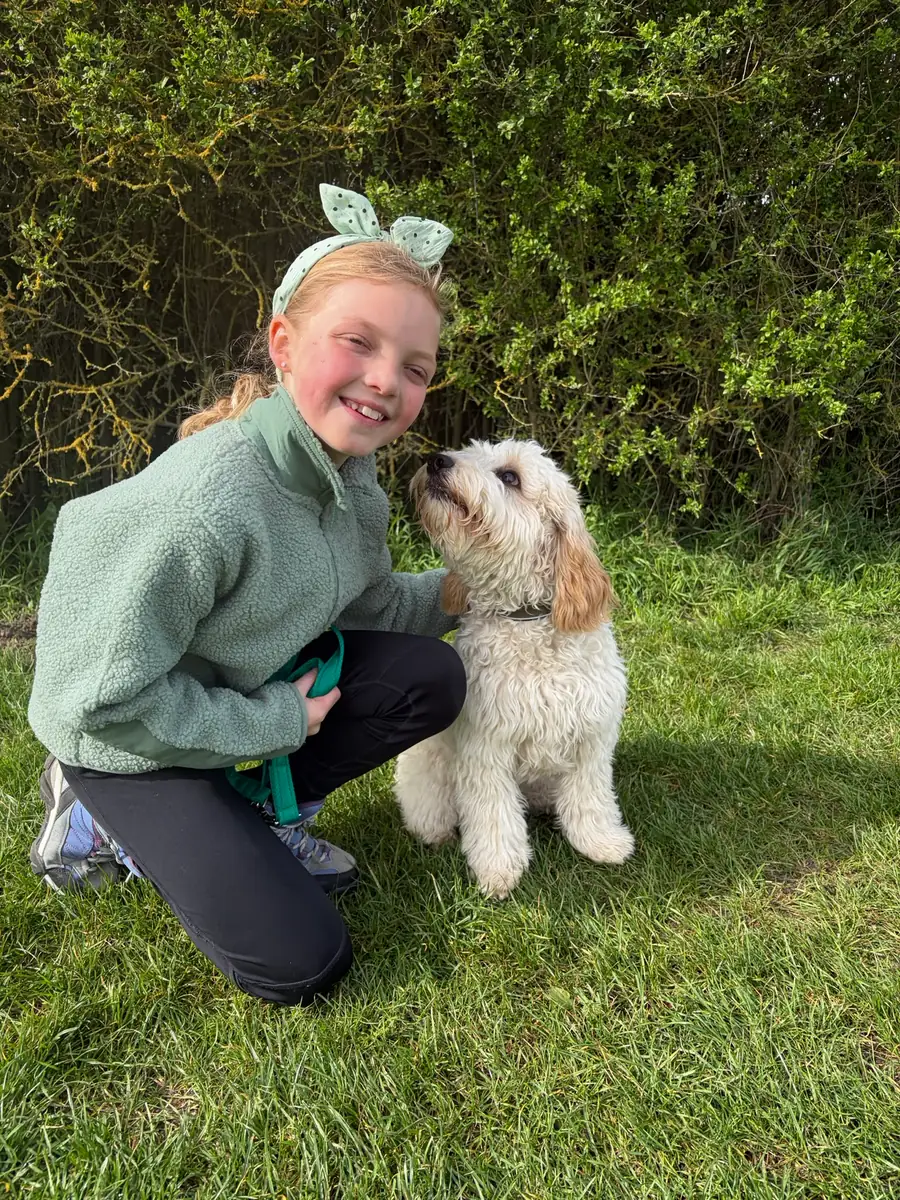
Calm greetings
Attention arrives when four paws stay on the floor.
The goal is not to suppress a friendly dog. It is to give their excitement a safer, more predictable route.
This page is for you if
- Your puppy jumps at almost everyone
- Your dog launches when visitors arrive
- Walk greetings end in muddy paws or embarrassment
- You worry about children or older relatives being knocked over
6+ years experience 27 five-star Google reviews DBS checked & canine first aid trained
How do I stop my dog jumping up on people?
Jumping often works because it gets a response. Looking, speaking, touching, pushing away, and excited greetings can all be rewarding from the dog's point of view.
The useful starting point is to make calm contact clearer and easier to repeat. Everyone greeting the dog needs to respond in roughly the same way.
Four basics to start with
- Turn away and pause attention when jumping begins
- Notice and reward all four paws on the floor
- Ask visitors to greet only once your dog is calmer
- Use a lead, gate, or separate space when safety matters
These are foundations, not a complete plan. If your dog is too excited or worried to use them, Jennie can help you find a more realistic starting point.
Which of these sounds most like your dog?
The same jump can have different causes. Jennie looks at the moment before it happens, what the dog gains from it, and how they feel around the person involved.
“My puppy jumps up at everyone and sometimes bites”
Puppies often discover that bouncing brings hands, voices, laughter, or play. When excitement rises, jumping may come with nipping, grabbing clothes, or biting hands. What feels small now can become harder when the dog is muddy or fully grown.
How Jennie helps: she shows the whole household how to reward a calmer greeting and reduce over-arousal without making normal puppy enthusiasm feel like a battle.
“My dog jumps all over visitors”
The doorbell, movement, voices, and a new person entering can create more excitement than your dog can manage. Some dogs are also anxious rather than simply friendly.
How Jennie helps: a home visit lets her see the arrival routine and build a visitor setup that works in your actual doorway and living space.
“My dog jumps at strangers or children”
Fast movement, high voices, uncertainty, or an urge to greet can all be involved. The priority is preventing falls, scratches, and unwanted contact.
How Jennie helps: she works at a safe distance, reads whether the dog is excited or worried, and coaches calmer choices without forced greetings.
The behaviour may look the same while the reason is different.
One dog may jump because greeting people is the most exciting part of the day. Another may be seeking reassurance, struggling with impulse control, or trying to make an unfamiliar person move away.
That distinction matters. A generic “ignore the dog” rule may help an attention-seeking habit, but it will not address fear, frustration, grabbing clothes, or a dog that is already too overwhelmed to think.
Jumping up is also common. Jennie's UK dog behaviour statistics page notes that it was reported by 57% of owners in the RVC pandemic-puppy cohort.
See the UK behaviour dataJennie looks for
- Who the dog jumps at and where it happens
- Loose excitement versus tension or worry
- What people do immediately after the jump
- Whether mouthing, barking, or grabbing is involved
- How quickly the dog can settle again
Teach the greeting you want, not only the jump you do not want.
Turning away can stop rewarding a jump, but the dog also needs a clear way to succeed. Jennie may work with four paws on the floor, a calm sit, a mat, or simply creating enough space for the dog's body to settle.
The right choice depends on the dog. Requiring a perfect sit can make some highly excited dogs more frustrated, while another dog may find that structure reassuring.
Jennie demonstrates the timing in person, then helps family members and visitors use a plan they can actually follow consistently.
What Jennie tailors
- The alternative greeting that suits your dog
- How visitors enter and interact
- Where leads, gates, or distance are useful
- Rewards your dog genuinely values
- How to increase difficulty without losing calm
Management comes before practice when someone could be knocked over.
Keep the dog separated, behind a secure gate, or safely on lead while people enter if jumping could frighten or injure someone. Children should not be used as training helpers for a dog that may bowl them over.
Once the initial excitement has reduced, Jennie can help you decide whether a greeting is appropriate and what calm behaviour is realistic for that dog.
Get personalised help if
- Your dog is large enough to knock someone down
- Jumping includes mouthing, grabbing, or barking
- Your dog looks tense or frightened around visitors
- Children or vulnerable adults visit the home
- The dog cannot settle after people arrive
What puppy owners say after working with Jennie
“So many helpful tips and ways to help our puppy behave inside the house and on walks.”
Karen asked Jennie for help with eight-month-old Millie. Her review highlights the value of seeing the puppy at home and leaving the family with practical changes they understood.
Karen Giles · Google review
“Clear and concise instructions on the how but also the why.”
Paul's review captures Jennie's aim: owners should understand the purpose behind the plan, not simply leave with a list of commands.
Paul Buck · Google review
One-to-one help for jumping up in Essex
If the jumping only happens in the difficult moment, that is the moment Jennie needs to understand. Home-based support can look at visitors and family greetings, while walk coaching can help when strangers are the trigger.
Jennie will help you distinguish excitement from anxiety, set up safe practice, and make sure everybody knows how to respond consistently.
Choose the support that fits
One-to-one puppy training is often the best fit for early greeting habits. Wider behaviour support makes more sense when jumping comes with fear, barking, grabbing, or an inability to settle.
Jennie's Positive Paws is based in South Woodham Ferrers and provides one-to-one puppy and dog training across Mid and South Essex.
Where to go next
Puppy training Essex
One-to-one help with calm greetings, biting, settling, lead skills, recall, and the routines that shape everyday behaviour.
Barking at visitors
Use this if the arrival problem includes barking, doorbell reactions, worry, or difficulty settling after people enter.
Dog behaviour training Essex
Best when jumping is part of wider over-arousal, anxiety, frustration, grabbing, or difficult behaviour in several situations.
Puppy biting and mouthing
Go here if jumping is paired with teeth on hands, grabbing clothes, or over-tired puppy chaos.
Why reward-based training works
Understand how attention and rewards shape behaviour without punishment or intimidating handling.
Ask what fits best
Tell Jennie who your dog jumps at, where it happens, and what else you notice. She can point you to the right route.
How to stop dog jumping up: common questions
Why does my dog jump up at people?
Common reasons include excitement, seeking attention, frustration, anxiety, or a habit that has worked before. Look at the dog's whole body and what happens immediately before and after the jump rather than assuming every dog is simply being friendly.
Should I ignore my dog when they jump up?
Turning away and pausing attention can help when attention is the reward, provided it is safe. The dog also needs calm behaviour to be noticed and rewarded. If jumping is driven by fear, frustration, or extreme arousal, ignoring alone is unlikely to solve it.
How do I stop my dog jumping up on me?
Turn or step away if it is safe, pause attention, then notice and reward four paws on the floor. Avoid pushing the dog down: hands, eye contact, and talking can feel like attention or play and may keep the jumping going.
How do I stop my dog jumping up at visitors?
Manage the doorway first so the dog cannot rehearse launching at people. Ask visitors to wait before greeting and give attention when the dog is calmer with four paws down. A home visit can help if the arrival is too exciting or worrying for your dog to cope with.
How do I stop my puppy jumping up at people?
Keep greetings consistent from the beginning: jumping pauses access to attention, while four paws down brings calm interaction. Puppy training can help when family, friends, and strangers all respond differently or the puppy becomes too excited to think.
What if my puppy jumps up and bites or nips?
Jumping and biting often appear together when a puppy is over-excited, over-tired, or trying to start interaction. Create space, pause the greeting, and offer a calmer activity rather than continuing a physical battle. Jennie can help if teeth on hands, faces, or clothes make greetings difficult to manage.
How do I stop my dog jumping up at strangers or children?
Prevent contact with a lead, gate, or separate space if a child could be knocked over. Do not ask a child to practise with a dog that may jump, mouth, or grab. Get professional help if you are unsure how to set up safe greetings.
Will my dog grow out of jumping up?
Not necessarily. Dogs repeat behaviour that continues to bring attention or access. Starting early is useful, but adult and rescue dogs can also learn calmer greetings with a consistent plan suited to the reason they jump.
Still unsure whether this is puppy training, everyday manners, or a wider behaviour issue? Try the quick Help Finder.