
Dog pulls towards other dogs: why it happens and what to do
If your dog spots another dog and suddenly pulls, surges, stares, barks, or cannot hear you, this page will help you work out what might be going on.
Some dogs pull towards other dogs because they are excited. Some are frustrated because the lead stops them getting there. Some are worried and trying to create space. From the outside, all of these can look like a dog dragging you towards another dog.
Please rest assured, this does not mean you have a bad dog or that you have failed them. It means your dog is communicating something loudly on the lead, and the first step is understanding what that something is.
The useful question is not only "how do I stop the pulling?" It is "why is my dog pulling in that moment, and what would help them make a better choice?"
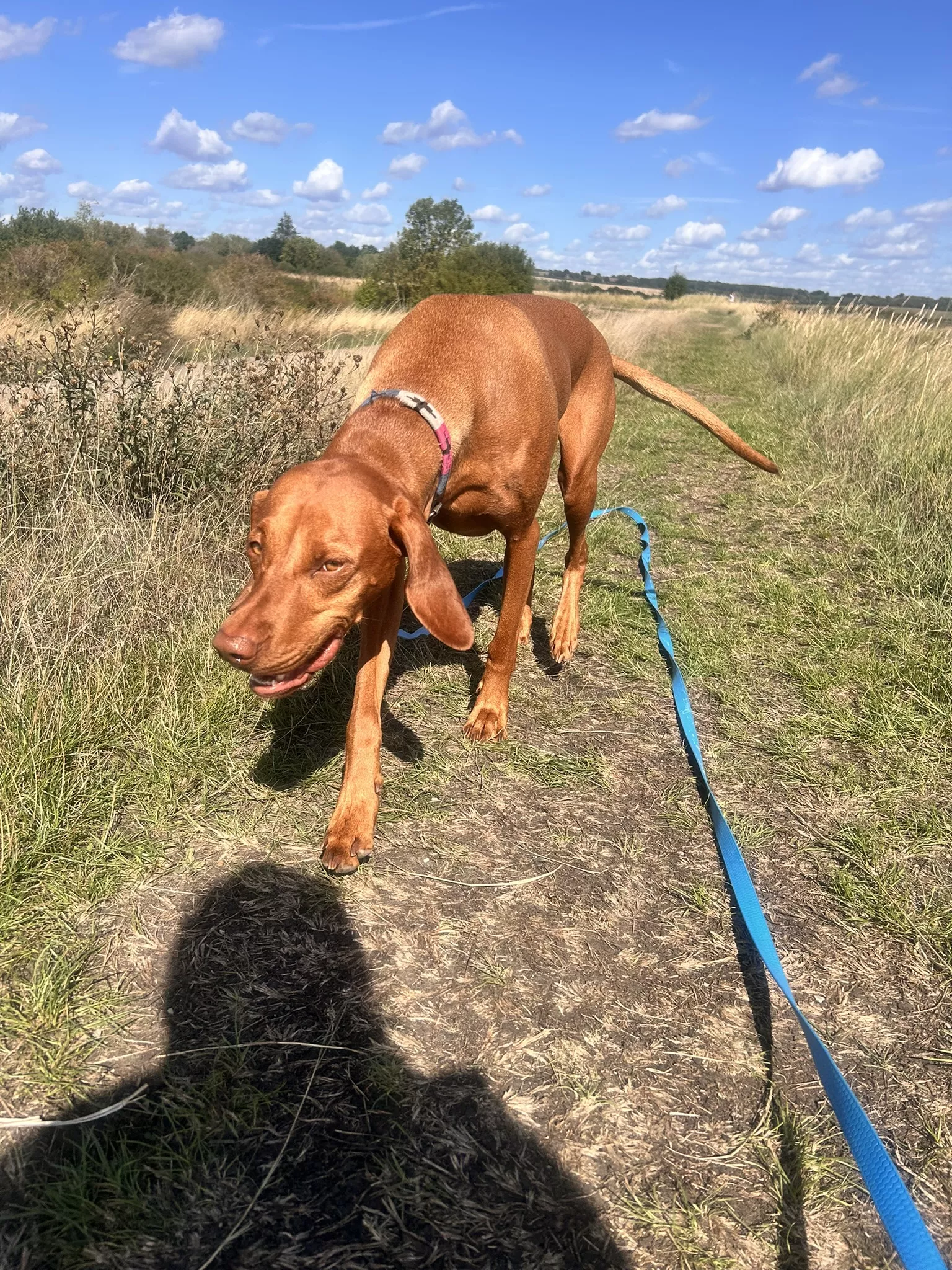
Before the lunge
Pulling towards dogs is often the early warning sign, not the whole problem.
Reading that earlier moment can stop walks becoming a repeated pattern of tension, dragging, barking, and recovery. You are looking for the moment before the red mist, not just the big reaction at the end.
This can look like
- Dragging towards dogs across the path or park
- Staring, freezing, then pulling suddenly
- Pulling paired with barking, whining, or lunging
- Ignoring food, cues, or your voice when dogs appear
6+ years experience 25 five-star Google reviews DBS checked & canine first aid trained
What should I do when my dog pulls towards another dog?
Create more distance before the lead goes tight, keep your own lead handling calm, and reward any moment your dog can look away or check back in with you. Do not force a greeting or keep marching closer to test whether your dog can cope.
Pulling can come from excitement, frustration or worry, so the longer-term plan depends on what your dog's body language is saying. If pulling regularly becomes barking, freezing or lunging, treat it as a behaviour issue rather than loose lead training alone.
The same pulling can come from very different feelings.
A dog who desperately wants to say hello may pull hard. A dog who is worried may also pull hard. A dog who has learned that dogs mean chaos may go from zero to frantic very quickly.
That is why generic loose lead advice can fall flat when other dogs are involved. The pulling is not happening in a quiet training bubble. It is happening in a moment your dog finds emotionally difficult.
This is workable, but it usually needs calmer setups rather than waiting for your dog to cope with the same hard pass-by again and again.
One-to-one help is useful when
- You cannot get your dog's attention once another dog appears
- Pulling turns into barking, spinning, whining, or lunging
- You avoid certain routes because dogs may be there
- You are not sure whether this is friendliness or reactivity
- Walks feel tense before anything has even happened
Excitement can still need structure
A friendly dog can still become frustrated, over-aroused, and hard to handle if every dog means rushing in or pulling hard.
Frustration builds fast on lead
The lead can make social frustration worse because your dog can see the other dog but cannot move freely or choose space.
Worry may look loud
Some worried dogs pull, bark, and lunge because they are trying to get more distance, not because they want a fight. Understanding that can make the whole walk feel less personal.
What to watch before your dog pulls
- Body getting taller, tighter, or lower
- Staring or locking on to the other dog
- Lead tension increasing before the pull
- Sniffing stops and your dog becomes less responsive
- Breathing, pace, or movement suddenly changes
What support often starts with
Jennie will usually look at distance, route choice, lead tension, recovery time, reward timing, and what your dog is doing before the pulling turns into a bigger reaction.
The aim is not to force your dog past other dogs. It is to help them cope, think, and recover more easily.
You should leave with clear next steps, not a list of things to feel guilty about.
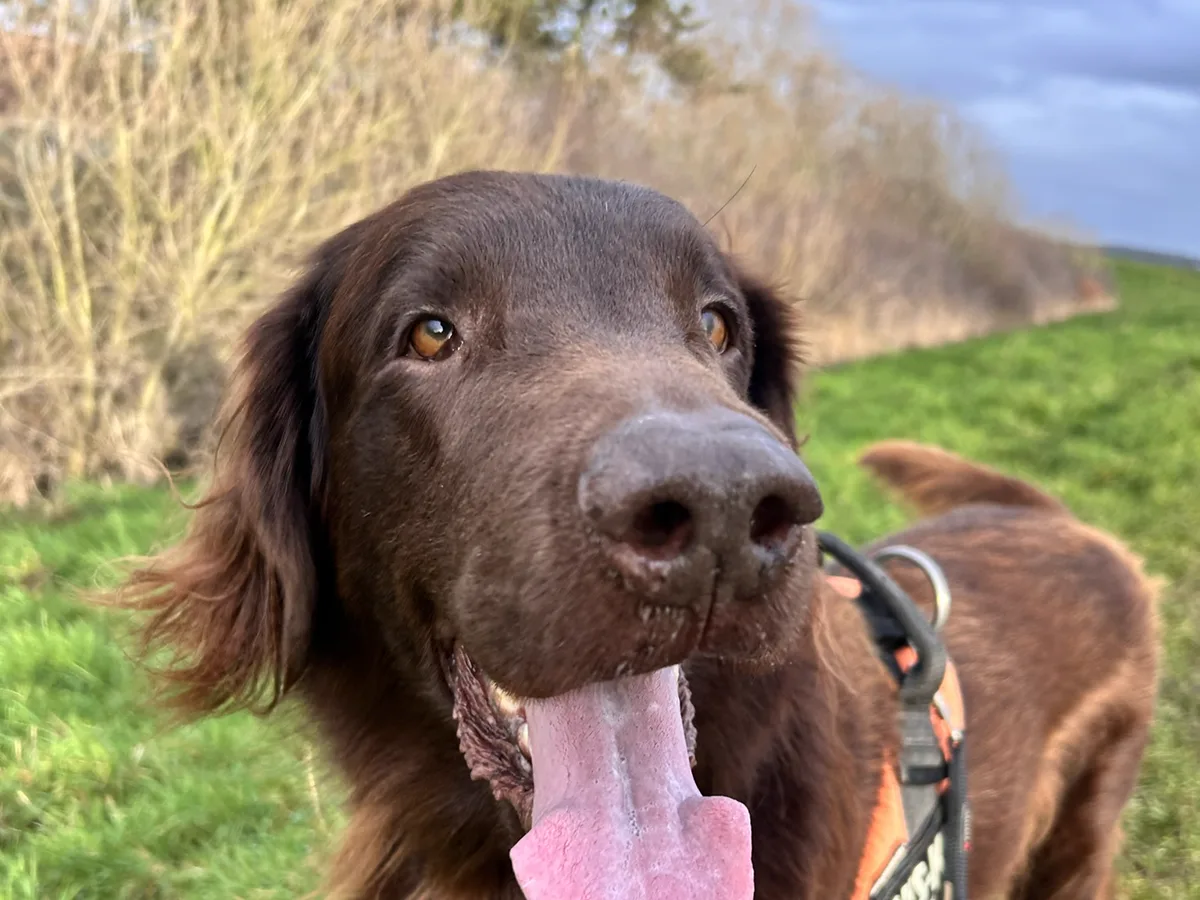
What to do in the moment
If your dog pulls towards another dog, start with making the situation easier rather than trying to win a battle on the lead.
The calmer you can make the setup, the more chance your dog has to notice you, take food, move away, or offer a small body shake afterwards.
- Create more space as early as you can
- Keep the lead calm and avoid adding more tension
- Reward any moment your dog can look away or check in
- Use easier routes while you practise
- Avoid repeated close passes that your dog cannot handle yet
If barking or lunging is already part of the picture, read the reactive dog on lead guide as well.
Ready to work on the real walk?
Assisted lead walks can help when the difficult bit happens outdoors and you need coaching in the actual places where your dog struggles.
Jennie's Positive Paws is based in South Woodham Ferrers and provides one-to-one dog training and behaviour support across Mid and South Essex.
See assisted lead walksWhere to go next
Loose lead walking
Use this if the main issue is pulling, rushing, zig-zagging, and lead tension across the whole walk.
Reactive dog on lead
Use this if pulling is paired with barking, lunging, freezing, or big reactions around other dogs.
Dog lunging at other dogs
Use this if the clearest problem is sudden lunging or barking when dogs appear.
Assisted lead walks
Useful when you want support on real walks, with the handling, spacing, and timing coached in the moment.
Behaviour support
Best if the walking problem sits inside a wider pattern of anxiety, frustration, barking, or home-life stress.
Ask what fits best
If you are unsure whether this is training, frustration, or reactivity, Jennie can help you decide.
Dogs Pulling Towards Dogs FAQs
Is my dog reactive if they pull towards other dogs?
Not always. Pulling can come from excitement, frustration, worry, or a mix of all three. If your dog also barks, lunges, freezes, or cannot recover, it may be worth treating it as a behaviour issue rather than simple pulling.
Should I let my dog say hello if they pull?
Usually not as the default answer. If pulling always leads to greetings, the pulling can become stronger. It is better to teach calmer choices and only allow greetings when both dogs are relaxed and it is appropriate.
Can this be fixed with loose lead training?
Sometimes. If the pulling is mostly a lead-skills issue, loose lead support may be enough. If the pulling is driven by frustration, fear, or reactivity, behaviour-aware walk coaching is usually more effective.
Can Jennie help on real walks?
Yes. Assisted lead walks are designed for dogs whose struggles show up outdoors. Jennie can help with spacing, route choice, reward timing, and what to do before your dog goes over threshold.
Still not sure this is the right fit for your dog? Try the quick Help Finder.