
Jennie's tip
“Walking with some well balanced dogs would massively help decrease the adrenaline rush he gets when he sees another dog.”
Jennie Dayer-Swan, Jennie's Positive Paws
Your puppy was doing so well. Now they pull, ignore you at the park and go wild when they see another dog. That's the teenage phase. It's normal, and it passes.
I'm Jennie, a one-to-one dog behaviour and puppy trainer based in South Woodham Ferrers. The way I work is about capturing the calm moments and rewarding them. With teenage dogs, that matters more than ever, because calm is exactly what they're short of.
The RSPCA says adolescence can start any time between six and 12 months, and end between 18 and 24 months.
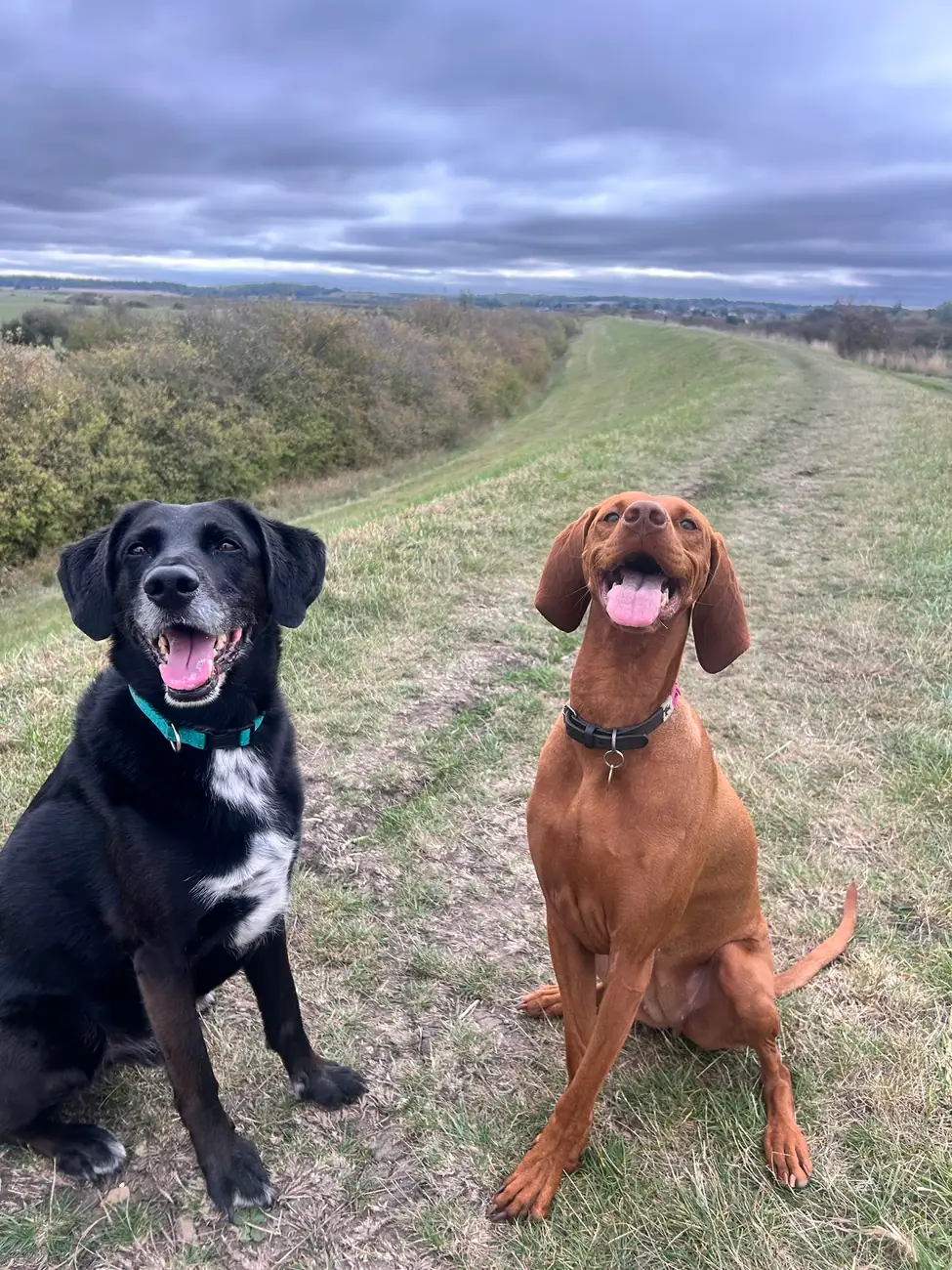
Calm company helps
6+ years experience 27 five-star Google reviews DBS checked & canine first aid trained
Their brain and body are changing fast. It isn't your dog being difficult on purpose, and it isn't you getting it wrong.
“Walking with some well balanced dogs would massively help decrease the adrenaline rush he gets when he sees another dog.”
Jennie Dayer-Swan, Jennie's Positive Paws
An excitable young male who hasn't been neutered is more likely to be told off more harshly by other dogs if he rushes up to them. Some owners will say no to a hello, and that's fine: not every dog wants to meet a bouncy teenager.
That's why short, calm greetings matter so much at this age.
He had clearly landed on his feet in his new home. But the moment he saw another dog, the lure was far too great. He'd dart past his owner to get to them, and at home he jumped up at the table and the windows.
We started at the doors, to bring his adrenaline down before every walk. Outside, rather than meeting dogs up close, he could follow at a distance and sniff where they'd weed, getting to know them without the excitement.
We added time on a bench, just watching the world go by, walks with a calm older dog, and long-line sniffing in the woods with his dinner scattered to find. Once he was less fixated, treats dropped in the grass when a dog appeared would take over.
Calm foundations before the teenage months hit, or a refresher once they have.
Open puppy trainingWhen your dog listens at home but ignores you outside.
Read the guideExcitement, frustration or worry? How to tell the difference.
Read the guideEvery dog is different. Talk through yours over Zoom and come away with ideas to try.
See online callsThe RSPCA says adolescence can start any time between six and 12 months, and end between 18 and 24 months. Every dog is different, and bigger breeds often take longer.
It's very common in the teenage months. Go back to the basics that worked, and reward every time they choose to look at you. On walks, a trailing long line means they can't practise ignoring you while you rebuild recall.
Keep it calm and simple. Pause at doors before walks, give their brain a job with a Kong or scent games, keep greetings with other dogs short, and reward every calm choice and every check-in.
No. Ask the other owner first, and keep it to a short, calm sniff before you call them away. Not every dog wants a bouncy teenager in their face, and young males in particular can get told off.
A 30 minute online call is a quick way to talk it through. If it's bigger than that, a home visit and a written plan is the next step.
Still not sure this is the right fit for your dog? Try the quick Help Finder.