
How to build better recall when your dog ignores you outside
If your dog comes straight back in the kitchen but seems to forget you exist in the park, outside is simply asking much more of them.
This guide covers what usually pulls a dog's attention away outside, and Jennie can then work on it with you, on the walks where it actually goes wrong.
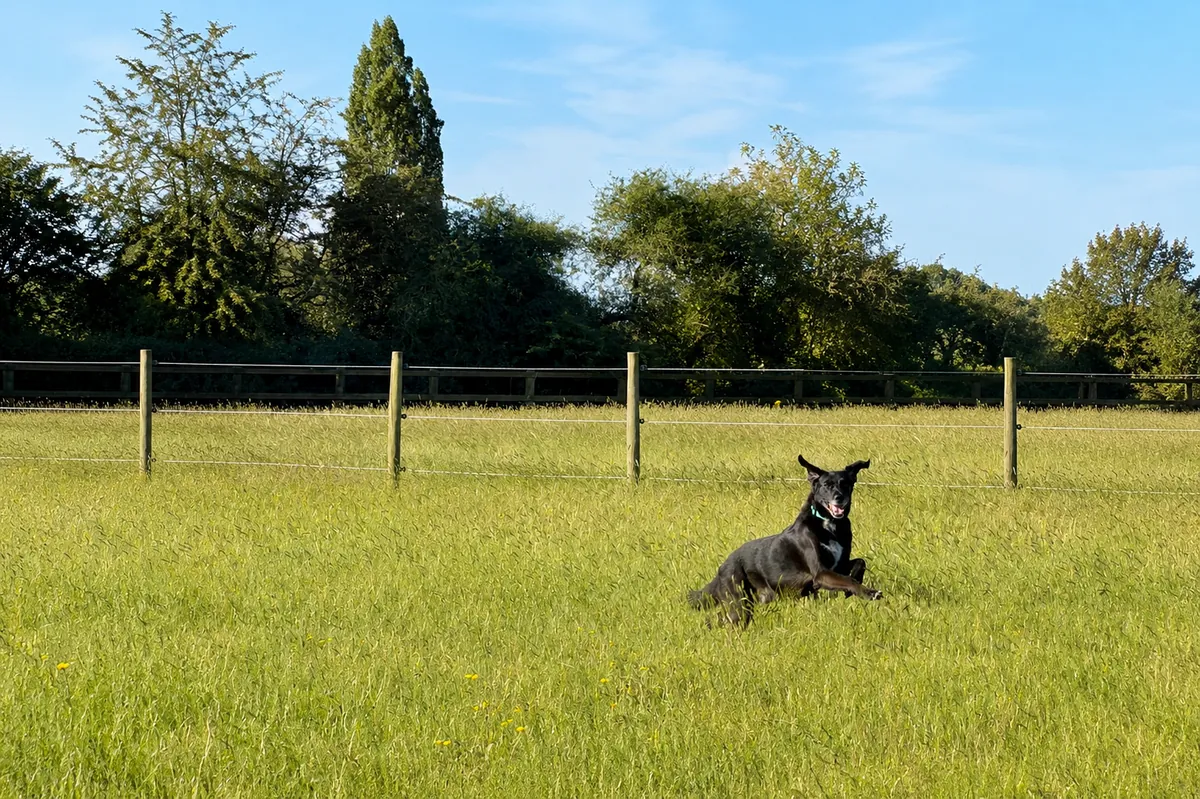
Freedom with a safety net
Recall grows through rewarding returns, not catching your dog out.
Start close, keep the cue special, and make coming back feel worth choosing even when the world gets interesting.
This page is for you if
- Your dog listens indoors but ignores you outside
- Recall disappears around dogs, people, smells, or wildlife
- You repeat the cue but your dog carries on exploring
- You do not yet feel safe giving your dog off-lead freedom
6+ years experience 27 five-star Google reviews DBS checked & canine first aid trained
Why does my dog come back at home but not outside?
At home, you are usually one of the most interesting things available. Outside, your dog is competing with movement, smells, open space, other dogs, people, and the freedom to keep exploring.
That does not mean your dog has forgotten their training. It usually means the cue has not yet been practised enough at the level of distraction you are asking them to handle.
Four basics to start with
- Choose one clear recall cue and avoid repeating it
- Begin somewhere quiet and secure
- Reward every return, even when it takes longer than hoped
- Reduce the difficulty if your dog cannot respond
If these fall apart on real walks, that is normal at higher distraction. Jennie can identify what your dog needs next.
Which of these sounds most like your dog?
These are some of the recall difficulties owners commonly search for. The same symptom can have different causes, which is why seeing the dog in context matters.
“My dog won't come back when called outside”
Smells, movement, people, and open space may be more rewarding than returning. Your dog may understand the cue but not yet be able to respond in that environment. Jennie finds the point where they can still notice you, then builds up from there on a real walk.
“Recall disappears around other dogs”
Excitement, frustration, worry, or a strong urge to greet can all make turning away feel impossible. Recall alone is not always the whole problem, so Jennie reads the emotion behind the behaviour first and works on focus at a distance your dog can manage.
“My dog only comes back when they feel like it”
The cue may have become background noise. Or your dog has learned that returning ends their freedom, so staying away pays better. Jennie looks at how the cue and rewards have been used so far and resets from there.
The right starting point is different for every dog.
Jennie first looks at what your dog is leaving you for, how quickly they become absorbed in the environment, and whether excitement, worry, or frustration is part of the problem.
A distinctive cue, sometimes a word such as “Readyyy”, may form part of the work. The important part is how that cue is introduced and built around your dog's real motivations.
Seeing your dog respond in person is what makes the starting point achievable, rather than a generic online formula.
Ask Jennie about your dogWhat Jennie tailors
- The cue and rewards that suit your dog
- The safest place to begin
- How much distance and distraction they can handle
- Whether a long line is appropriate
- How recall fits with the rest of your walk
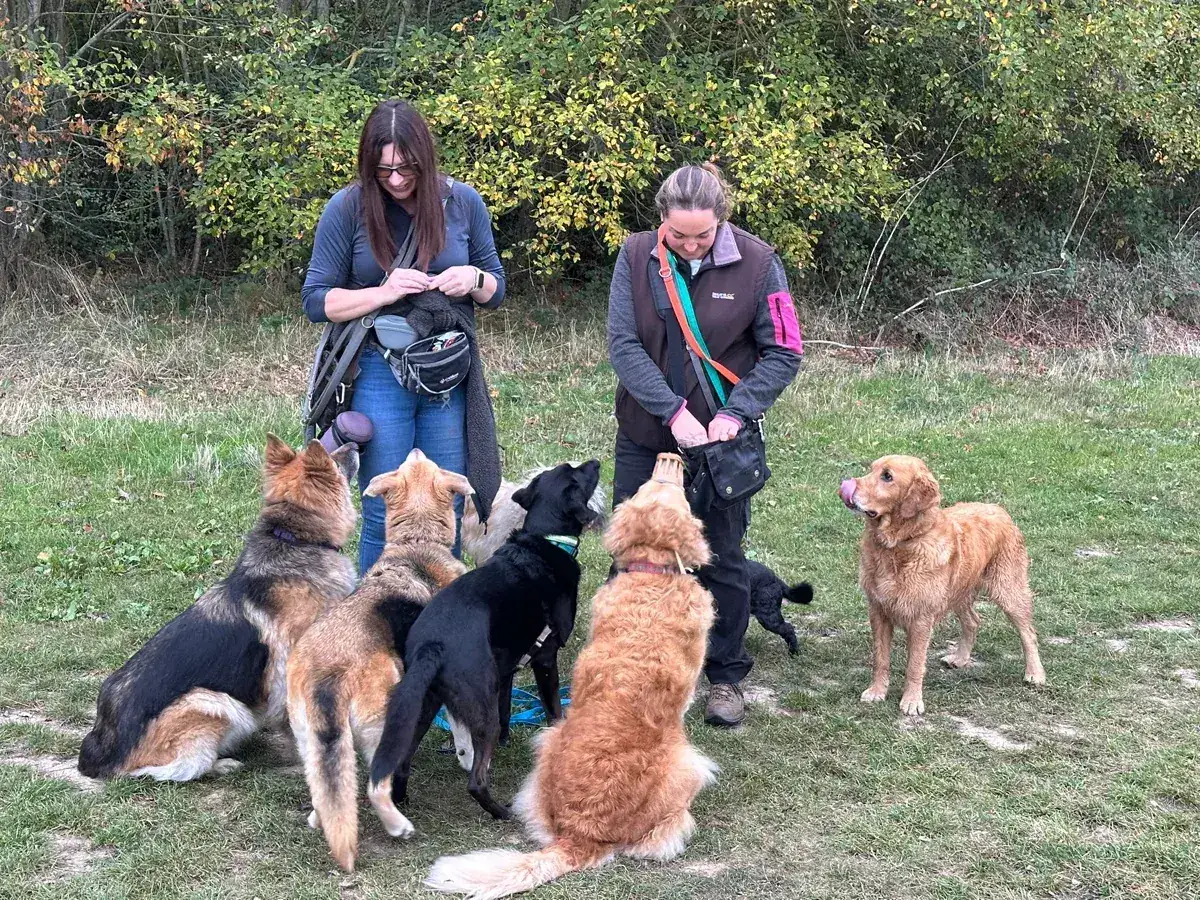
The right reward depends on the dog in front of you.
Some dogs respond well to food, while others value play, movement, sniffing, or being released to explore again. Jennie may use games such as “find it”, but the game is chosen and adapted around the dog's behaviour.
Timing matters just as much as the reward itself. A session lets Jennie watch the exact moment your dog disconnects and show you what will make turning back worthwhile.
What Jennie looks for
- What captures your dog's attention
- When they stop being able to listen
- Whether they prefer food, play, movement, or space
- How quickly they recover from a distraction
- What makes checking in feel worthwhile
Give your dog space without giving up the safety net.
Jennie may use a supervised long training line to give a dog more freedom while retaining a safety connection. It can create a useful stage between close lead work and genuine off-lead freedom.
The appropriate line, environment, and handling technique depend on the dog's size, speed, confidence, and triggers. Jennie can demonstrate this safely and help you avoid the tangles, jolts, and loss of control that can happen when long lines are used without guidance.
Why practical guidance matters
- Choosing equipment that suits your dog
- Reading the environment before giving more space
- Handling the line without tangling or sudden pressure
- Knowing when your dog is ready for more freedom
What can make recall weaker?
Repeating the cue
Saying the word again and again can teach your dog that the first call does not matter. Jennie can help you rebuild clarity without creating more frustration.
Telling your dog off when they return
Even if coming back took ages, punishment can make the next return less likely. Jennie will show you how to respond without weakening trust.
Only calling when fun ends
If recall always predicts the end of freedom, staying away can become the better deal. A tailored plan helps change that association.
Why has my dog's recall suddenly become worse?
Adolescent dogs often become more independent and more interested in the environment. A recall that looked reliable as a young puppy may need rebuilding when distractions start to matter more.
Changes in routine, a frightening experience, increasing frustration around dogs, or repeatedly practising in places that are too difficult can also affect recall.
If the change is genuinely sudden and comes with signs such as confusion, pain, reduced hearing, unusual tiredness, or other behaviour changes, speak to your vet rather than treating it as a simple training problem.
Go back a stage, not back to blame
A temporary dip does not mean the training is ruined. Reduce the difficulty, rebuild rewarding repetitions, and use the long line while reliability grows again.
See one-to-one training supportWhat owners say after working with Jennie
“She built trust between my pup and me by using a lunge lead and recall tips.”
Ella came to Jennie with reactivity around dogs and selective listening. After practising between sessions, she said the training was solidified and her dog later managed an off-lead play date brilliantly.
Ella Delaney · Google review
“Coco will walk off lead making sure Jennie is not too far behind.”
Vallie's review describes the trust and check-in habit owners ultimately want from safe off-lead time: freedom without the dog disconnecting from the person walking them.
Vallie Gallie · Google review
Recall is harder when the real problem is bigger feelings.
Some dogs are not simply distracted. They may be frightened, frustrated, over-aroused, or desperate to reach other dogs. In those cases, recall practice works best alongside help for the emotion driving the behaviour.
- Your dog bolts towards dogs, people, roads, or wildlife
- They cannot eat, play, or notice you in normal walking environments
- Recall difficulty sits alongside barking, lunging, or panic
- You feel unsafe handling the long line alone
- You are unsure when off-lead practice is appropriate
One-to-one dog recall training in Essex
Jennie can work with you on the walk that matters, helping you choose the right starting environment, handle the line safely, improve reward timing, and understand what your dog can realistically manage right now.
Where to go next
Assisted lead walks
Real-world coaching for line handling, outdoor focus, distractions, and calmer choices on your usual walks.
Loose lead walking
Use this if pulling and lead tension are difficult across most of the walk, not only during recall practice.
Dog pulls towards other dogs
Useful when other dogs are the main distraction and your dog surges, stares, whines, or cannot turn away.
Reactive dog on lead
Start here if recall difficulty is paired with barking, lunging, freezing, or intense reactions.
Puppy recall foundations
Build name response, early recall, lead skills, and calm focus from the beginning with one-to-one puppy help.
Ask what fits best
If you are not sure whether this is a training skill or a wider behaviour issue, Jennie can help you choose.
Dog Recall Training FAQs
Why does my dog come when called at home but not outside?
Outside contains much stronger distractions, including smells, movement, dogs, people, and open space. Practise at a level where your dog can respond, then increase distance and distractions gradually rather than jumping straight from the kitchen to a busy park.
Should I use my dog's name as their recall cue?
You can, but a separate, distinctive recall word is often easier to keep powerful. Jennie may use a word such as “Readyyy” and pair it closely with rewards so it predicts something worth turning back for.
Should I tell my dog off if they eventually come back?
No. From your dog's point of view, the telling-off happens when they reach you. Reward the return, then make the next repetition easier so they can respond sooner.
How do I practise recall safely with a long line?
Use a well-fitting harness, supervise continuously, keep the line within reach, and practise away from roads and immediate hazards. Watch for tangles and take control before your dog reaches full speed. A secure enclosed area is the safest option when wildlife or livestock may be present.
Can an adult, older, or rescue dog learn better recall?
Yes. Start at an easy level, use a fresh cue if the old one has lost meaning, and find rewards that matter to that individual dog. Progress may need to be slower if the dog is worried, easily overwhelmed, or still learning to trust their new environment.
Is a whistle better than a spoken recall word?
Either can work. A whistle carries well and sounds consistent, while a spoken word is always available. Reliability comes from careful pairing, rewarding successful returns, and practising gradually rather than from the cue itself.
When is it safe to let my dog off lead?
Only when the location allows it, you can see and manage likely hazards, and your dog's recall is reliable enough for that environment. Continue using secure areas and a supervised long line if you are not confident they will return around the distractions present.
Still not sure whether recall training or wider behaviour support is the right fit? Try the quick Help Finder.