
Not settling at home
Pacing, not sleeping, unable to relax, startling at sounds, or following you from room to room. These are signs of a dog who does not yet feel safe, not a dog who is badly behaved.
You brought a rescue dog home, you are doing your best, and something is not sitting right. Maybe they are not settling the way you hoped. Maybe walks are stressful, home life feels harder than you expected, and you are starting to wonder if you are doing something wrong.
You are not doing something wrong. What you are living with is real, and it is one of the most common reasons owners contact Jennie.
Rescue dogs often arrive carrying things you cannot see. They may not know the rules of home life yet. They may find noise, visitors, or other dogs overwhelming. They may hide, bark, pull, freeze, or react in ways that feel unpredictable, and because you do not know their full history, it can feel like you are guessing at what they actually need.
Jennie offers rescue dog behaviour support across Essex, including South Woodham Ferrers, Chelmsford, Maldon, Braintree, and nearby areas. This work is personal to her. It is the reason she started Jennie's Positive Paws.
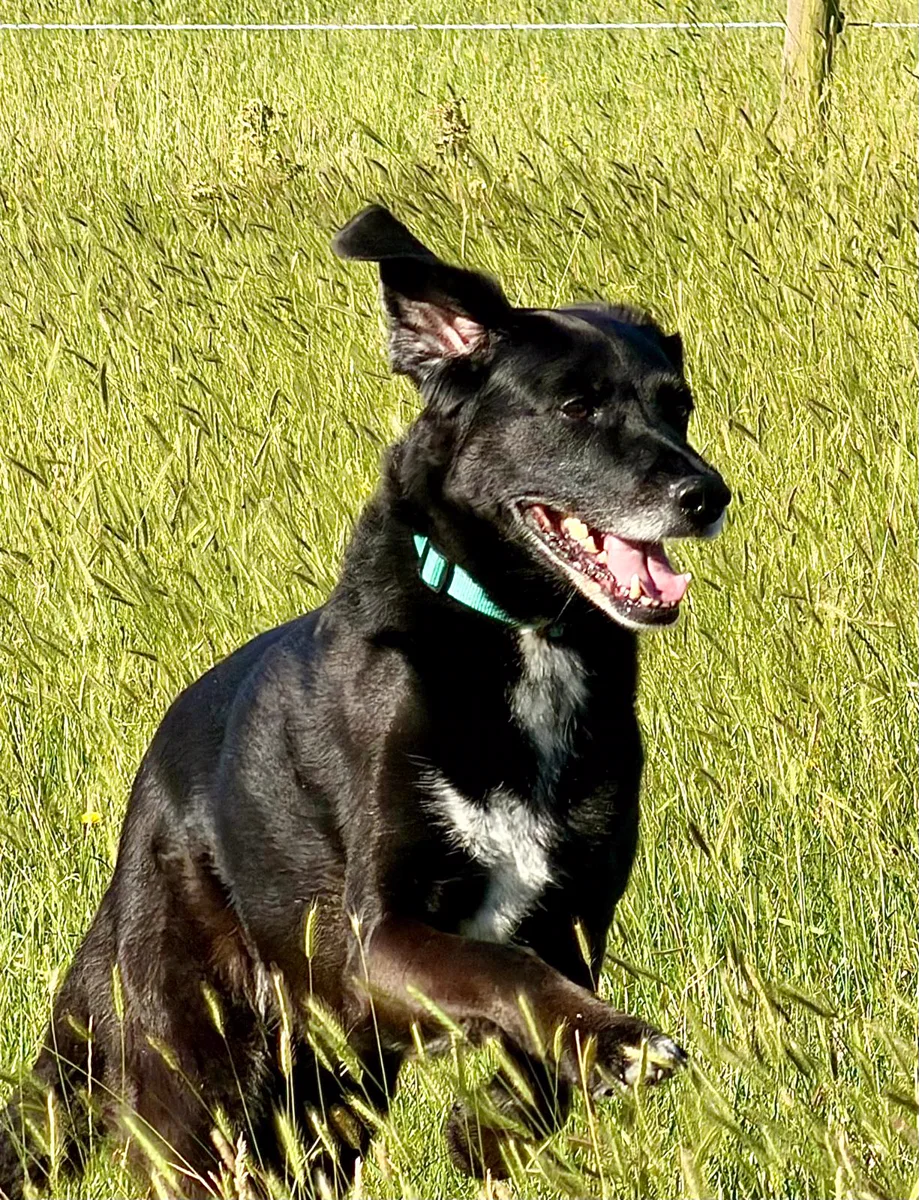
Toby
Toby is the reason Jennie started this work. His story is the foundation of how she supports rescue dog owners across Essex today.
Many owners are told to give it time. Sometimes that is right. But sometimes the behaviour is not going to settle on its own, and every week that passes without the right support can make the pattern more established and harder to shift.
Getting help early is not giving up. It is the most practical thing you can do for a dog who is struggling to cope with the world they have just arrived in.
Pacing, not sleeping, unable to relax, startling at sounds, or following you from room to room. These are signs of a dog who does not yet feel safe, not a dog who is badly behaved.
Barking, lunging, pulling, or shutting down completely on walks. Many rescue dogs have not had enough calm experience of the outside world to feel confident in it yet.
Some rescue dogs have learned to suppress stress signals because showing worry did not help them before. That can make it hard to know what is going on until things have already gone wrong.
New homes are full of unfamiliar noise, movement, and people. A dog who has not had consistent positive experience of these things may bark or panic as a way of managing what feels threatening.
Not all struggling rescue dogs are loud. Some freeze, hide, or withdraw. Quiet fear matters just as much as visible reaction, and it deserves the same careful, patient support.
The earlier you get support, the easier it is to build the right foundations before difficult patterns become established. If something feels hard right now, that is enough reason to get in touch.
When I rescued Toby, I thought I was bringing home a calm, gentle dog. What I actually brought home was a dog with complex needs I did not yet understand, and for a while I felt completely lost.
The early days were genuinely hard. Walks that fell apart. Moments at home I did not know how to manage. I cried more than once trying to work out what Toby needed and whether I was ever going to be able to give it to him.
The first advice I was given told me to be firmer. More in control. It felt wrong from the start, and it did not help either of us. I knew there had to be a better way, but I did not yet have the knowledge to find it on my own.
What changed things was meeting a behaviourist who approached Toby differently. Someone who looked at what he was trying to communicate, rather than what he needed to stop doing. That shift changed the whole picture.
Not overnight. Not without effort. But steadily and genuinely. Toby began to trust the world around him. Walks became something we could both handle. And the bond we built through working through the hard parts together, rather than against each other, became something I had not expected.
Toby became my greatest teacher. That bond, earned through the difficult days, is the reason I started Jennie's Positive Paws. If you are standing in your kitchen after a hard walk, unsure of what to do next, I know exactly what that feels like. That is who I built this for.
Most rescue dogs take weeks to months to feel genuinely settled, and some take longer, especially if they arrived from a shelter, an overseas rescue, or a difficult background. The commonly referenced guide of three days to decompress, three weeks to learn the routine, and three months to feel at home is a useful starting point, but it is not a fixed rule. If your dog is still struggling after the first few weeks, that is worth paying attention to rather than simply waiting.
Many rescue dogs have not had enough calm, consistent experience of the world to feel safe in it. Home noises, visitors, other dogs, or unfamiliar routes can all feel much more threatening to a dog who has not had the time or experience to build reliable trust in new environments. Some rescue dogs also carry the effects of previous handling, trauma, or lack of early socialisation. That is not your fault, and it is not permanent. It is information about where the support needs to start.
A short settling period matters, but giving them time without any structure can also allow difficult patterns to become established. The most useful starting point is calm routine, gentle handling, and basic day-to-day management rather than formal training sessions. Getting support early if something feels genuinely hard is not rushing things. It is the most practical step for a dog who is struggling to cope with their new environment.
Yes. One-to-one support is often especially useful for rescue dogs because every dog is different and the plan needs to fit the specific dog, the specific home, and the specific things that are making life hard right now. Jennie works with rescue dogs and their owners across Essex, starting at home so the real environment, the real triggers, and the real daily routine are all part of the picture from the very beginning.
These reviews are from owners who came to Jennie with rescue dogs who were reactive, overwhelmed, or hard to manage at home. They reflect the experience most rescue dog owners share: feeling stuck, then finding a way through.
“Jennie never made us feel judged at all, just super friendly and helpful.”
Romanian rescue, evening barking, first session made a difference
Jennie is actual magic. We have a Romanian rescue who we have trained but her barking in the evenings was getting out of control. There’s so much advice online it’s hard to know what works best. Then enters Jennie and within minutes the training and advice had already made a difference. My husband and I both agree it’s the best money we have ever spent. I was concerned and worried we would be told off or looked at as bad owners but Jennie never made us feel judged at all, just super friendly and helpful. It’s made such a difference to our lives in just a week. We can’t thank Jennie enough.
“I now feel much clearer about what to do.”
reactive rescue pup, recall, trust building
Jennie has opened my mind to so many tools to help my rescue pup. I came to her with mainly reactive behaviour around other dogs and selective listening. She demonstrated how to get my newly rescued reactive pup to look at me and actually listen, then solidified the training on our second meet up. Her advice to put more trust in my pup has gone a long way and the clear guidance from our first session still helps us day to day. I now feel much clearer about what to do.
“I saw results from the behaviour almost immediately.”
two rescue dogs from abroad, reactivity and house manners
I recently had a consultation from Jennie as I have two rescue dogs from abroad and was experiencing problems with reactivity and house manners. Jennie was very knowledgeable and helpful and I saw results from the behaviour almost immediately. She explained how to communicate in dog language and it was really interesting. The follow up notes are excellent as a reminder of how to intercept any further problems. I wouldn’t hesitate to recommend her services.
“She clearly knew her stuff and our dog was very responsive.”
rescue Border Collie, home visit and lead walking
Jennie came to see me and my wife at home to help with our new rescue Border Collie who has a number of issues. She was very thorough in her advice and clearly knew her stuff as our dog was very responsive. We went for a walk and she made various suggestions which seem to be working as regards walking properly on a lead. Followed up with a very helpful email. Would thoroughly recommend.
Most sessions start at home, where Jennie can see the real routine, the real triggers, and the real moments that are making things hard. She will ask about your dog's background where you know it, observe how they behave in their actual environment, and work through the most important steps with you practically.
You leave with written notes and a clear plan that fits your dog, your home, and the moments that feel hardest right now. If the biggest challenge is outside, the session can include a walk from home so the coaching happens where the difficulty is actually showing up.
No judgement about your dog or about how you have been managing so far. No pressure to admit you got things wrong. No harsh methods, punishment-based approaches, or advice to dominate or correct your dog into behaving differently.
Rescue dogs need to build trust in the world, and in you. The support here is built around that, at your dog's pace, using reward-based methods that help both of you feel clearer and more confident over time.
Some rescue dogs do settle with time, space, and a stable routine. These are the signs that one-to-one support will help more than waiting alone.
If any of these apply, one-to-one behaviour support is usually the most effective next step.
Jennie calls every new enquiry back personally to hear about your dog and confirm whether one-to-one support is the right fit before anything is booked.
Tell Jennie about your dogUse this page if your rescue dog barks, lunges, or falls apart once the lead goes on. It covers why this happens and what calmer walks can look like.
Read the guideStart here if the main pressure point is at home, around the front door, arrivals, or people coming into your space.
Read the guideUseful if your rescue dog cannot be left alone, panics when you leave, or destroys things or vocalises when you are out.
Read the guideStart here if your rescue dog's behaviour feels bigger than one specific issue and you want a full behaviour plan shaped around them.
Open behaviour supportOne-to-one rescue dog behaviour support in and around Chelmsford, from home visits to walk coaching.
See local pageLocal one-to-one support for rescue dogs in and around Braintree, starting where the problem actually shows up.
See local pageJennie's full story, including how Toby changed the way she works and why rescue dog support is at the heart of what she does.
Read about JennieTell Jennie about your rescue dog and she can point you towards the support that fits best before anything is booked.
Ask Jennie firstIt varies a great deal. Many rescue dogs take several weeks to months before they feel genuinely settled, and some take longer, particularly if they came from a shelter environment, an overseas rescue, or a history that included limited positive experience of home life. If your dog is still not settling after the first few weeks, that is worth taking seriously rather than simply waiting for time to fix it.
Dogs who are not settling are usually telling you that something about their environment still feels uncertain, overwhelming, or unpredictable. That might be noises, routines that do not yet feel reliable, unfamiliar smells, visitors, or just the general strangeness of a new home. It is not a sign that your dog is broken or that you are doing something wrong. It is information about what they still need.
A short settling period is sensible, but calm, consistent routine and gentle handling from day one is not the same as formal training and is almost always helpful. The main risk of doing nothing is that difficult patterns become more established over time. If something feels genuinely hard in the first few weeks, getting support early is the most practical thing you can do.
Start by reducing the number of moments where your dog is going over threshold. That usually means quieter routes, more space from triggers, and shorter walks to begin with, not because your dog cannot cope with the world forever, but because every walk that ends in a reaction is reinforcing the same difficult pattern. One-to-one support can help you understand what your dog is reacting to, where the threshold is, and how to build calmer walks step by step.
It is common for rescue dogs who have had limited positive exposure to the world to bark at sounds, movement, visitors, or other dogs. Barking is usually communicating something: worry, uncertainty, frustration, or an attempt to control distance from something that feels threatening. It is not something to punish. Understanding what is behind the barking is the most effective starting point.
It can make the picture less clear at first, but it does not prevent effective support. Behaviour-based work starts with what the dog is showing you right now, not with what may or may not have happened before. What your dog does in their current home and on their current walks tells you a great deal about what they need, even without a full history.
Almost certainly not. Most rescue dog owners who contact Jennie have been doing more right than they realise and beating themselves up for things that were never going to be easy. The feeling of getting it wrong is one of the most common things owners say at the start of a first session. It is usually the first thing to shift once they understand what their dog is actually communicating.
Often yes. Dogs rescued from countries with different environments, handling traditions, or levels of human contact can find UK home life particularly disorienting at first. They may be unaccustomed to traffic, domestic sounds, leads, indoor living, or the level of human interaction a UK home involves. That does not mean they cannot adjust, but it does mean the settling period and early support may need more patience and a clearer understanding of what they are finding hard.
Puppy training focuses on building good habits from the beginning. Rescue dog support often needs to start by understanding what a dog has already learned, what they find threatening, and what their current stress level looks like before any new behaviours can be built. The pace is usually slower, the trust-building phase matters more, and the plan needs to fit where the dog actually is rather than where a younger dog might be expected to start from.
Yes. Home visits are often the most effective starting point for rescue dog support because the home is where most of the behaviour is actually happening. Jennie can see the real routines, the real triggers, and the real environment rather than working from a description. Sessions can then extend into outdoor work when that is where the harder moments are showing up.
Reward-based, positive reinforcement methods only. No punishment, no physical corrections, no dominance-based approaches. Rescue dogs often have complex histories and benefit most from patient, trust-led support that helps them feel safer and more confident over time. The aim is never to suppress behaviour through fear or pressure. It is to understand what the dog is communicating and help them find calmer, more manageable ways of coping.
Yes. Jennie offers rescue dog behaviour support across her Essex service area, including South Woodham Ferrers, Chelmsford, Maldon, Braintree, Colchester, Southend, Wickford, and Basildon. If you are not sure whether your area is a good fit, get in touch and she can confirm before anything is decided.
She has been there. She knows what it feels like to be lost, to try advice that does not work, and to finally find an approach that makes sense. That is the support she offers every rescue dog owner who gets in touch.